Internet Of Things
Top 7 Benefits of IoT in Logistics: Smarter, Faster, Safer Supply Chains
UniConverge Technologies · 26 Sept 2025 · 5 min read
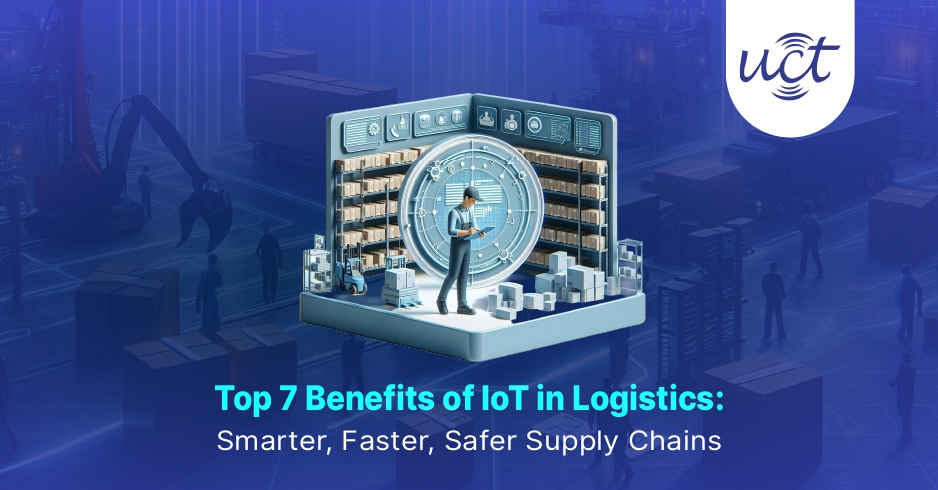
The logistics industry is undergoing a massive transformation, and the benefits of IoT in logistics are at the forefront of this change. By integrating IoT (Internet of Things) technology, businesses can achieve smarter operations, faster deliveries, and safer supply chains. A key enabler of this transformation is LoRaWAN gateways, which provide long-range, low-power connectivity for IoT devices.
In this article, we’ll explore the top 7 benefits of IoT in logistics, with a focus on how LoRaWAN gateways are making supply chains more efficient, cost-effective, and sustainable.
1. Real-Time Tracking and Visibility
Real-time tracking is one of the most important benefits of IoT in logistics. IoT devices, powered by LoRaWAN gateways, enable businesses to monitor shipments, vehicles, and inventory in real time, both in warehouses and during transit.
How LoRaWAN Gateways Help:
- Warehouse tracking: LoRaWAN gateways connect sensors across large warehouses, providing real-time updates on inventory and equipment.
- In-transit tracking: With their long-range capabilities, LoRaWAN gateways enable cost-effective tracking of vehicles and shipments, even in remote areas.
Example:
A logistics company can use LoRaWAN-enabled GPS trackers to monitor the location of delivery trucks in real time, ensuring timely deliveries and reducing delays.
| Feature | How It Helps |
| Long-range connectivity | Tracks assets over large distances |
| Low power consumption | Extends battery life of devices |
| Real-time updates | Improves visibility and reduces delays |
2. Enhanced Inventory Management
Accurate inventory management is critical for avoiding overstocking or stockouts. IoT sensors connected via LoRaWAN gateways make this process seamless by providing real-time data on stock levels.
Benefits of LoRaWAN in Inventory:
- Real-time updates: Sensors automatically update inventory counts, reducing manual errors.
- Cost-effective monitoring: LoRaWAN’s low-power technology minimizes operational costs.
- Improved accuracy: Businesses can track inventory movement with precision.
Example:
Smart shelves equipped with LoRaWAN sensors can detect when stock levels are low and automatically trigger reordering, ensuring uninterrupted operations.
| Challenge | LoRaWAN Solution |
| Manual errors | Automated inventory updates |
| High monitoring costs | Low-power, cost-effective sensors |
| Overstocking/stockouts | Real-time stock level tracking |
3. Predictive Maintenance
Equipment breakdowns can disrupt logistics operations and lead to costly delays. IoT devices, supported by LoRaWAN gateway networks, enable condition-based monitoring of equipment, helping businesses predict and prevent failures.
How It Works:
- Sensors monitor equipment conditions like temperature, vibration, and pressure.
- Data is analyzed to predict when maintenance is needed, reducing downtime.
Example:
A fleet manager can use LoRaWAN-enabled sensors to monitor tire pressure and engine performance, scheduling maintenance before issues arise.
4. Fleet and Route Optimization
Efficient fleet management is essential for reducing costs and ensuring timely deliveries. LoRaWAN gateways provide a reliable and cost-effective solution for vehicle tracking and route optimization.
Benefits:
- Long-range tracking: Monitor vehicles across large geographic areas.
- Fuel efficiency: Optimize routes using real-time data.
- Driver performance: Track driver behavior to improve safety and efficiency.
| Problem | LoRaWAN Solution |
| Inefficient routes | Real-time route optimization |
| High fuel costs | Data-driven route planning |
| Limited connectivity | Long-range, reliable tracking |
5. Safety and Security Enhancements
Safety and security are top priorities in logistics. LoRaWAN gateways enable remote monitoring and alerts, ensuring cargo and personnel safety.
Key Features:
- Geofencing: Alerts when vehicles deviate from designated routes.
- Cargo monitoring: Detects tampering or theft in real time.
- Driver safety: Monitors driver fatigue and behavior.
Example:
A logistics company can use LoRaWAN-enabled sensors to monitor cargo conditions, such as temperature and humidity, ensuring the safety of perishable goods.
6. Data-Driven Decision Making
IoT generates vast amounts of data, and LoRaWAN gateways make it easier to collect and analyze this data for better decision-making.
Insights Gained:
- Operational efficiency: Identify bottlenecks and optimize processes.
- Customer trends: Understand customer behavior to improve service.
- Cost savings: Analyze data to reduce waste and improve resource allocation.
Example:
A logistics company can use data from LoRaWAN-connected devices to identify peak delivery times and allocate resources accordingly.
7. Superior Customer Experience
Happy customers are the backbone of any successful logistics operation. IoT, powered by LoRaWAN gateways, enhances the customer experience by providing real-time updates and faster deliveries.
Benefits:
- Live tracking: Customers can track their orders in real time.
- Faster resolutions: IoT data helps resolve issues quickly.
- Personalized service: Tailor services based on customer preferences.
How to Get Started with IoT in Logistics
Implementing IoT with LoRaWAN gateways doesn’t have to be complicated. Here’s how to get started:
- Assess your needs: Identify areas where IoT can add value.
- Choose the right technology: Select LoRaWAN gateways and sensors that fit your requirements.
- Integrate with existing systems: Ensure seamless integration with your current infrastructure.
- Train your team: Educate employees on using IoT tools effectively.
- Monitor and optimize: Continuously analyze IoT data to improve operations.
| Step | Action |
| Assess needs | Identify problem areas |
| Choose technology | Select LoRaWAN gateways and sensors |
| Train team | Educate employees |
Case Study: IoT Logistics Success in India
In India, a logistics company piloted a project using LoRaWAN gateways to track shipments and optimize routes. The results were impressive:
- 20% reduction in delivery times.
- Improved customer satisfaction with real-time updates.
- Cost savings through efficient route planning.
This case study highlights the potential of LoRaWAN technology in addressing local logistics challenges.
Why IoT is the Future of Logistics
The benefits of IoT in logistics go beyond just improving efficiency. IoT, powered by LoRaWAN gateways, is helping businesses create smarter, faster, and safer supply chains. From real-time tracking to predictive maintenance, IoT is transforming logistics into a more reliable and customer-focused industry.
Conclusion
The benefits of IoT in logistics are undeniable. By leveraging IoT technology and LoRaWAN gateways, businesses can improve visibility, optimize operations, and deliver a superior customer experience. Whether you’re looking to reduce costs, enhance safety, or streamline inventory management, IoT offers the tools you need to succeed.
Ready to take your logistics operations to the next level? Start exploring IoT solutions today and unlock the full potential of your supply chain.