Lorawan
LoRa and LoRaWAN: The Ultimate Guide
UniConverge Technologies · 27 Jan 2023 · 5 min read

What is LoRaWAN?
LoRaWAN is an open-source, low-power wide-area network protocol designed for the Internet of Things (IoT) and Machine-to-Machine (M2M) communication. It is the main protocol used by LoRa, a type of long-range wireless technology. LoRaWAN is best suited for connecting battery-powered sensors and actuators in buildings, factories, farms, and other large outdoor areas.
LoRaWAN relies on radio frequency (RF) communication to send and receive data over long distances. It uses an adaptive data rate to ensure that the data is sent at the most efficient rate for the given situation, helping to reduce energy usage. It also utilizes an end-to-end encryption protocol to ensure secure data transmission. Additionally, its star topology allows devices to send and receive messages directly to a base station, eliminating the need for a central coordinator.
The benefits of LoRaWAN include low power consumption, low cost, and long-range communication capabilities. It is ideal for applications such as smart water metering, asset tracking, predictive maintenance, and agricultural monitoring. Furthermore, its open-source nature makes it easy to develop applications and solutions with LoRaWAN.
The difference between LoRa and LoRaWAN
LoRa and LoRaWAN are two technologies that are often confused due to the similarity of their names. While both technologies are based on the LoRa modulation scheme, they two technologies have different applications and functions.
LoRa is the physical layer modulation scheme used to send data over radio frequencies. It is a spread-spectrum frequency-hopping technique that allows for long-range communication with low power. LoRa is used for low-power, low-data-rate wireless communication and is optimized for low-power devices.
LoRaWAN is a network layer protocol that is built on top of the LoRa modulation technique. It is a media access control (MAC) protocol that allows devices to communicate with each other and provide the necessary features to enable IoT applications. It provides features such as secure communication, end-to-end encryption and network management.
In summary, LoRa is the modulation technique used to transmit data wirelessly while LoRaWAN is the protocol used to manage the communication between devices. LoRa is the physical layer while LoRaWAN is the network layer. LoRa is the hardware, and LoRaWAN is the software. Both are necessary for an IoT application.
How LoRaWAN works?
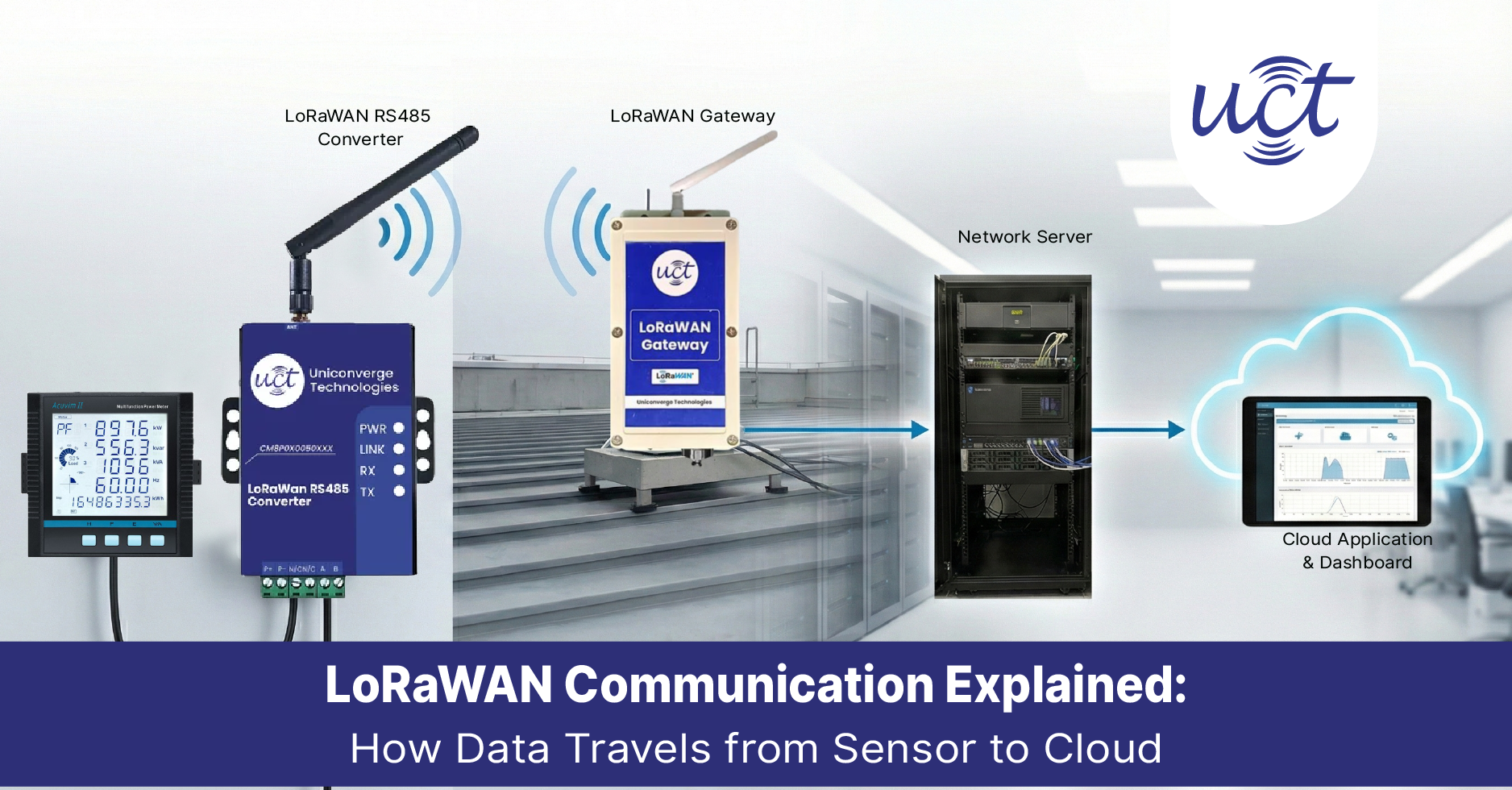
LoRaWAN is a network protocol for wide-area communication networks. It is based on the LoRa radio technology and is designed for low-power and low-data-rate applications. The network is composed of gateways and endpoints. The gateways are connected to the internet and receive and transmit data from and to the endpoints or nodes. The nodes are the devices which are equipped with the LoRa radio technology to communicate with the gateways.
The communication between the nodes and gateways is based on a distributed network topology. Every node communicates with the gateways through different spreading factors. The spreading factor is used to spread the transmission over the air, making it more efficient and secure. The gateways then transmit the data to a backend system using the internet.
In addition to the communication between the nodes and the gateways, LoRaWAN also offers access control. The access control is used to ensure that authorized nodes can communicate with the gateways. This is implemented by the use of an adaptive data rate algorithm which is used to select the best data rate for each node.
Finally, LoRaWAN provides secure communication by encrypting the data that is transmitted over the network
Characteristics of LoRaWAN
LoRaWAN is an open, low-power wide-area network (LPWAN) designed for large-scale deployment of Internet of Things (IoT) devices. It is built on top of the LoRa radio protocol and provides bidirectional communication between connected devices and gateways. It is designed to support long-range communications and is capable of covering large distances with very low power consumption.
LoRaWAN has several characteristics that make it an ideal choice for IoT applications:
1. Low power consumption: LoRaWAN is designed for low power consumption and is optimized for devices with low power requirements. This makes it ideal for battery-powered devices, as well as for applications that need to run for extended periods without interruption.
2. Long-range communication: LoRaWAN is known for its long-range communication capabilities, allowing devices to communicate over distances of up to 15 km (9.3 miles). This makes it ideal for applications that need to cover large areas.
3. Flexible network topology: LoRaWAN is designed to support multiple topologies, allowing for a wide range of deployment options.
4. LoRa and LoRaWAN are two important technologies that are revolutionizing the Internet of Things (IoT). LoRa, which stands for Long Range, is a Low Power Wide Area Network (LPWAN) technology developed by Semtech. LoRaWAN is an open-source network protocol that is based on LoRa and is used to build large-scale, low-power wireless networks.
LoRa and LoRaWAN provide numerous advantages for IoT applications. They can provide long-range connectivity, low-power consumption, and low cost. Additionally, LoRaWAN provides secured communication and scalability, allowing for a large number of connected devices. This makes LoRa and LoRaWAN ideal solutions for IoT applications such as smart cities, smart agriculture, and asset tracking.
Conclusion
Overall, LoRa and LoRaWAN technology is important for the future of IoT. They provide a low-cost, low-power, and secure way to build large-scale, wireless networks that can be used for a variety of applications. The combination of LoRa and LoRaWAN will be a key factor in building a smarter, more connected world.