Lorawan
LoRaWAN Gateways: Practical, Low-Cost Connectivity for Industry 4.0
UniConverge Technologies · 12 Aug 2025 · 3 min read
Introduction
LoRaWAN Gateways are transforming how factories, farms, and cities collect and act on sensor data. Designed for long-range, low-power communication, these gateways make it feasible to connect hundreds—or even thousands—of small devices across wide areas without frequent battery changes or expensive wiring. As manufacturers and operations teams push toward Industry 4.0, the real value of LoRaWAN gateways isn’t just range or power savings — it’s the ability to deliver reliable, low-cost connectivity that supports real-time insights, smarter maintenance, and measurable efficiency gains.
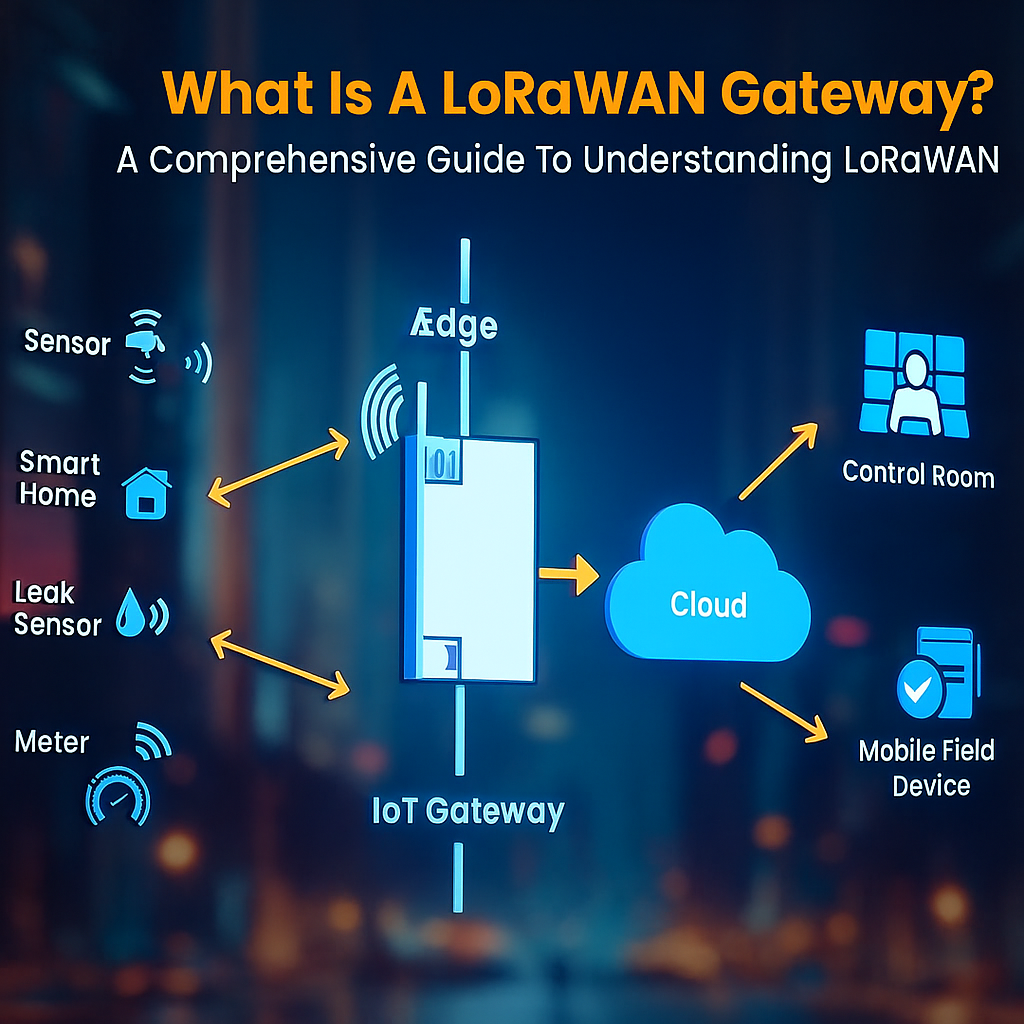
How LoRaWAN Gateways Work (in plain steps)
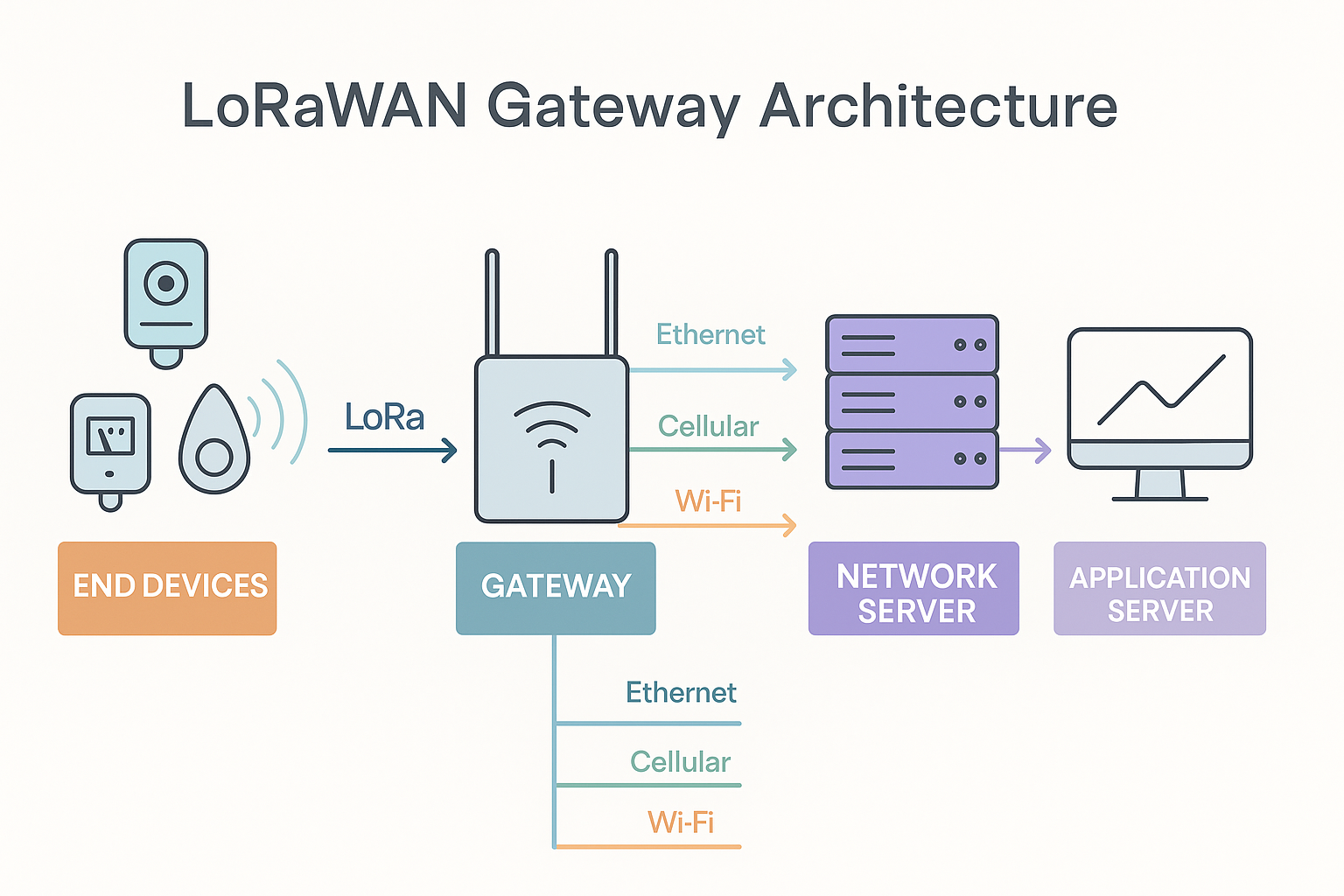
- Listen: Gateways receive short radio messages from LoRa sensors placed on machines, assets, or in the field.
- Aggregate: They collect messages from many devices and prepare them for transmission.
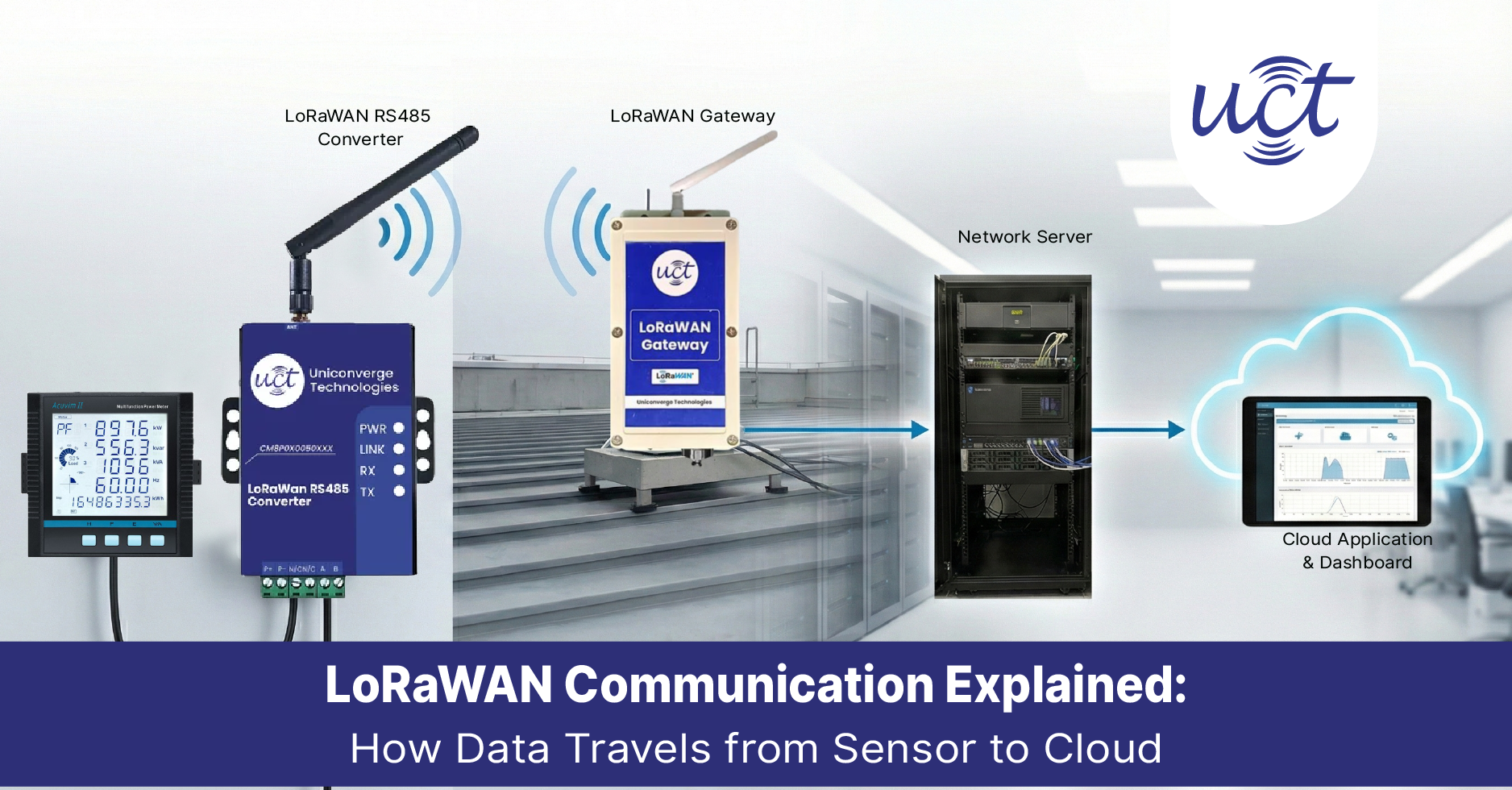
- Forward: Using a backhaul (Ethernet, cellular, or Wi-Fi), gateways send data to a network server where it’s authenticated and routed to application platforms.
- Control: Downlink messages (e.g., configuration changes or commands) can be scheduled back to devices via the same gateway.
This chain keeps most processing light-weight on the device side while allowing centralized analytics or localized edge actions when needed.
Core Benefits for Industry 4.0
- Coverage over distance: One gateway can service sensors over kilometers in suitable terrain, cutting infrastructure costs.
- Years-long battery life: Low transmit power and efficient protocols mean many sensors run for years on a single battery.
- Simple scale-up: Add sensors without redesigning networks; gateways handle high device density.
- Practical security: Standardized encryption and device authentication reduce tampering risks when configured correctly.
Practical Use Cases (concrete, non-generic)
- Production-line monitoring: Vibration and temperature sensors report anomalies so teams fix small issues before they become costly breakdowns.
- Inventory & asset tracking across sites: Low-power asset tags keep tabs on trailers, containers, or tools across a campus.
- Utility metering & leak detection: Automated alerts from meters and moisture sensors help cut losses and billing errors.
- Microclimate control in warehouses: Distributed sensors feed HVAC controls to reduce spoilage and energy use.
Deployment Checklist — quick, action-oriented
- Choose frequency band that matches your country’s regulations.
- Plan gateway placement for line-of-sight where possible; move antennas higher to improve range.
- Decide backhaul: Ethernet for stable sites, cellular for remote locations.
- Enable remote management (firmware updates, logs, diagnostics) to minimize on-site visits.
- Harden security: Use per-device keys and monitor for abnormal traffic patterns.
Avoid common pitfalls
- Placing a gateway inside a metal room or behind thick concrete will greatly reduce coverage — test outdoors or at roof-height first.
- Don’t overload a single gateway on uplink-heavy applications (e.g., very frequent sensor broadcasts); balance devices across multiple gateways.
- Keep a clear OTA update plan to patch gateways and preserve network health.
What’s next — trends to watch
- Edge decisioning: Performing short analytics at the gateway to reduce cloud traffic and speed alerts.
- Hybrid networks: Combining LoRaWAN for long-range, low-power use with LTE/5G for bandwidth-heavy tasks.
- Smarter orchestration: Gateways that self-optimize based on interference, traffic, and device priority.
Beyond their technical advantages, LoRaWAN gateways also foster operational agility. Because they work with a wide variety of sensors and platforms, businesses aren’t locked into one vendor or technology stack. This interoperability allows gradual upgrades, pilot testing of new use cases, and integration with existing systems without major downtime. Moreover, with open-source network servers and expanding community support, organizations can experiment with new deployments at minimal cost, ensuring that their IoT strategy remains adaptable in a rapidly changing industrial landscape.
Conclusion
For organizations moving toward Industry 4.0, LoRaWAN gateways offer a pragmatic path to wide-area IoT: low power, low cost, and high flexibility. By planning placement carefully, selecting the right management features, and focusing on specific operational outcomes (downtime reduction, energy saving, better asset visibility), companies can unlock meaningful ROI without heavy upfront network investment.