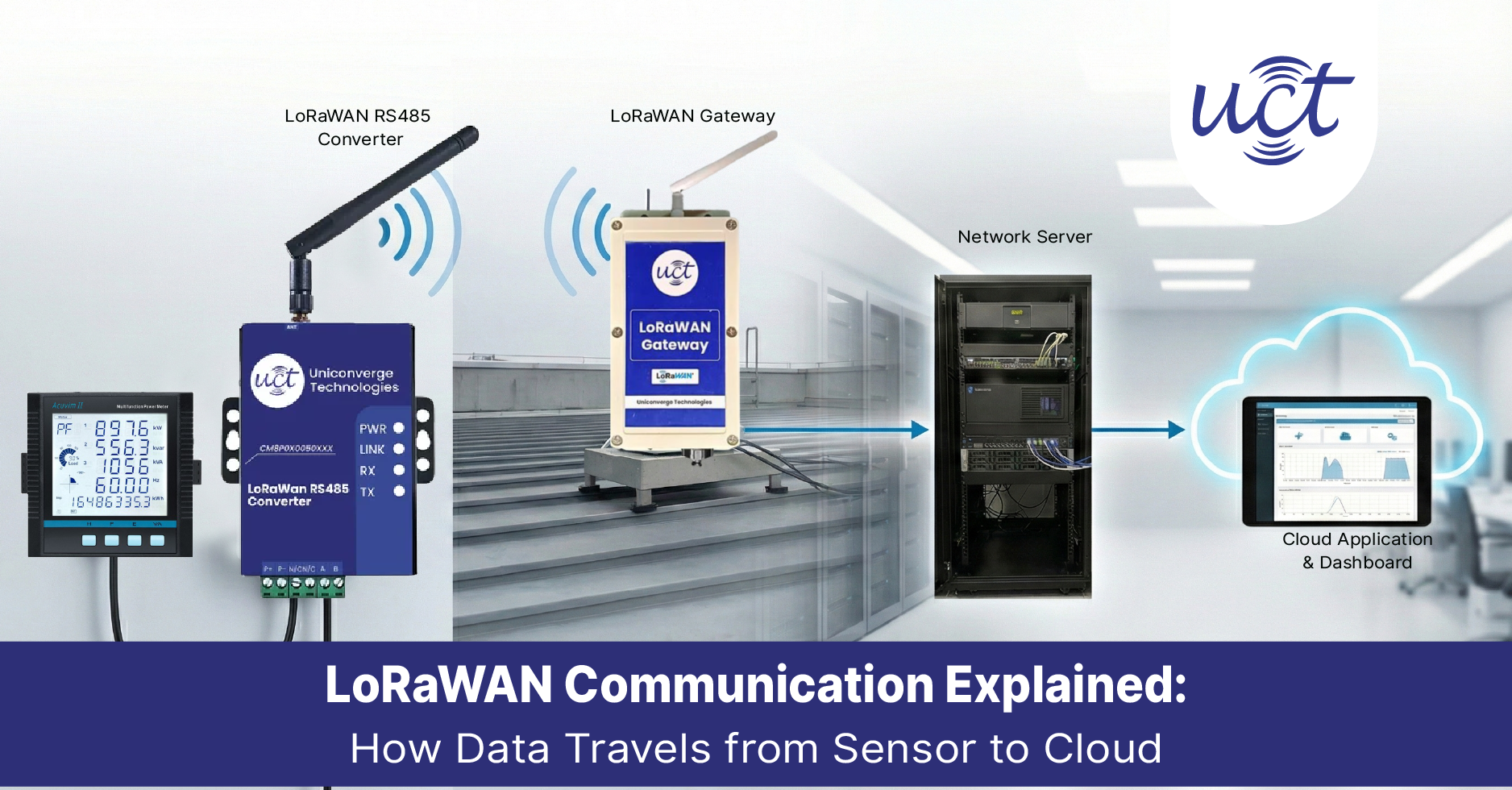
Lorawan
LoRaWAN Gateway Deployment: Best Practices for Coverage, Range, and Signal Reliability
UniConverge Technologies · 19 Nov 2025 · 5 min read
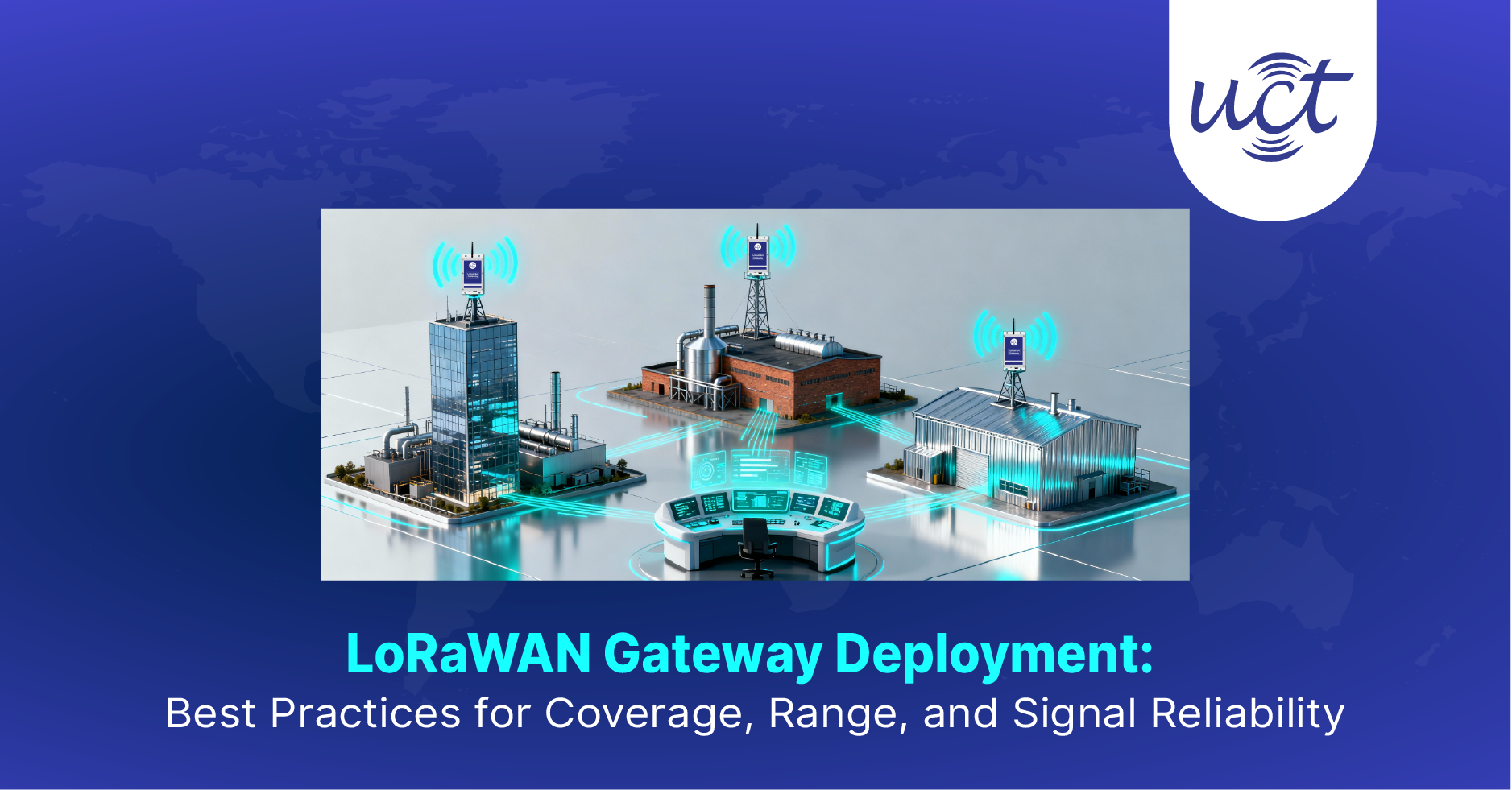
Why Your LoRaWAN Gateway Deployment Matters More Than You Think
In an increasingly connected world, LoRaWAN technology powers countless IoT devices that monitor everything from smart cities to industrial machinery. But the backbone of these networks—the LoRaWAN gateways—must be expertly deployed to ensure wide coverage, strong signals, and reliable communication. A poorly positioned or configured gateway can cripple your entire IoT project, resulting in dropped messages, unhappy clients, and wasted investments. For companies like Uniconverge Technologies, mastering the art and science of gateway deployment means delivering seamless, scalable IoT connectivity that drives business results.
The Fundamentals of LoRaWAN Gateway Deployment: What You Need to Know
A LoRaWAN gateway serves as the vital link between your IoT sensors and the network server. It captures sensor data sent over long ranges and forwards it using more reliable backhaul methods (like Ethernet or cellular). Before you even start mounting hardware, understanding the deployment environment, regulatory factors, and project goals is essential.
- Site Survey & Environment Assessment: Map the area considering building materials, terrain, and potential RF interference sources.
- Regulatory Compliance: Check local regulations on frequency bands, duty cycles, and power limits.
- Hardware Selection: Match gateway capabilities to project scale and future growth plans.
Network Planning: Mapping Your Way to Maximum Coverage
Effective network planning begins with a comprehensive site survey. Strategic placement of gateways is essential to cover all sensor nodes without excessive overlap or dead zones.
- Key Actions: Use floor plans and outdoor mapping tools to mark coverage zones and obstacles like thick walls or foliage.
- Model Antenna Types: Choose between omnidirectional antennas (broad coverage) and directional antennas (targeted coverage).
- Plan for Scalability: Anticipate increased device counts and the need for additional gateways.
| Planning Step | Description | Outcome |
| Site Survey | Analyze terrain, obstacles, and environment | Optimal candidate gateway sites |
| Gateway Selection | Choose hardware and antenna types | Right capacity and range |
| Coverage Mapping | Model signal reach and strength | Minimized dead zones |
| Scalability Forecasting | Predict growth and traffic | Easy future expansion |
Antenna Positioning for Optimal Range and Signal Strength
The magic of LoRaWAN depends heavily on thoughtful antenna placement. A high-mounted antenna with clear line of sight dramatically improves signal reach and penetration.
- Position antennas 5 to 15 meters high (roughly 16 to 50 feet) to avoid obstructions like walls, trees, and buildings.
- Use antennas with approximately 6 dBi gain for best balance between range and signal quality.
- For omnidirectional antennas, slight downward tilting (5°–10°) focuses signals toward ground-level sensors.
- Ensure a minimum of 70 cm clearance around antenna to reduce signal blockage.
- Use premium RF cables (e.g., Andrew HELIAX or LMR-400) to minimize signal loss, avoid very long cables.
Antenna alignment should maintain vertical polarization for compatibility with most end devices and optimize reception.
Multi-Gateway Topology and Scalability Considerations
Deploying multiple gateways improves coverage, reliability, and network capacity. However, it requires planning to avoid interference and overlap.
- Gateway Density: Place gateways to create an overlapping coverage pattern that reduces dead zones while minimizing RF interference.
- Load Balancing: Distribute end-device traffic across multiple gateways to avoid bottlenecks.
- Network Management: Utilize cloud-based platforms to monitor gateway health, traffic, and coordinate performance.
Scalability is key; as your IoT network grows, so should your gateway topology.
Coverage Optimization and Range Extension Techniques
Various techniques can optimize your LoRaWAN deployment’s reach and capacity:
- Antenna Type Usage: Combine omnidirectional antennas for general coverage and directional antennas for hard-to-reach areas.
- Spreading Factor Adjustment: Higher spreading factors increase range but consume airtime and reduce throughput; balance accordingly.
- Repeaters and Signal Boosters: Consider in large, obstacle-heavy environments, but use sparingly due to latency.
- Environmental Margin: Account for extra signal attenuation indoors or underground when planning.
Interference Reduction: Ensuring Signal Reliability
Signal interference can severely degrade network performance. Use these methods to keep your signals clean:
- Channel Planning: Separate gateways onto different frequency channels, respecting regulatory duty cycle constraints.
- Adaptive Data Rate (ADR): Automatically optimizes transmission parameters per device based on link quality.
- Spatial Separation: Position gateways and antennas to provide physical distance between potentially interfering signals.
- Advanced Techniques: Frequency hopping, listen-before-talk (LBT), and signal processing algorithms reduce collisions.
- Routine Monitoring: Use analytics to identify and resolve interference sources early.
Gateway Configuration and Ongoing Network Management
Successful deployments don’t end at installation. Regular configuration reviews, updates, and performance monitoring are essential.
- Gateway Registration: Register each gateway with the network server, correctly configure LoRa parameters (frequency, bandwidth, etc.).
- Firmware Updates: Keep gateways up to date to avoid bugs and exploit new features.
- Data Analytics: Monitor traffic patterns and signal quality metrics to fine-tune performance and predict maintenance needs.
- Proactive Maintenance: Inspect hardware periodically, verify power and grounding.
High-Quality Components and Installation Materials (Content Gap Addressed)
Many IoT projects fail due to cheap cables and improper weatherproofing.
- Use premium coaxial cables to reduce signal attenuation, especially for outdoor setups.
- Select antennas with an appropriate IP rating to withstand weather conditions.
- Properly ground all equipment to prevent electrical damage.
- Implement high-quality, adjustable mounts and poles for precise antenna positioning and stability.
Reliable Backhaul and Synchronization
Gateway backhaul through Ethernet or cellular networks must be stable and secure. GPS modules ensure precise location and timing, enhancing network sync and data integrity—critical for applications requiring time stamping or coordinated transmissions.
Simplified Deployment and Zero-Touch Installation
Modern gateways support plug-and-play functionality. This reduces deployment time and human error, allowing even non-experts to deploy gateways efficiently with:
- Remote configuration
- Automated parameter tuning
- Plug-and-play hardware integration
Common Network Challenges and How to Avoid Them
- Device Misconfiguration: Always verify device and gateway frequencies, spreading factors, and keys match.
- Outdated Firmware: Schedule updates regularly.
- Gateway Overload: Monitor message load to prevent packet loss.
- Interference: Use careful site planning and technology tools.
Real-World Case Studies and Cost Efficiency
Uniconverge Technologies utilizes cost-effective gateways and optimized designs to deliver scalable IoT solutions for urban and industrial environments. Their field deployments illustrate how careful planning reduces infrastructure costs while maximizing network performance.
Future Trends and Technological Innovations
Looking ahead, Uniconverge Technologies is investigating:
- AI-driven network management to predict and solve connectivity issues autonomously.
- Integration of edge computing in gateways for real-time local processing.
- Enhanced security measures to keep IoT data safe from cyber threats.
Conclusion: Deploy Like a Pro with Uniconverge Technologies
LoRaWAN gateway deployment is not just about putting hardware in place; it’s a science of coverage optimization, interference management, and scalability planning. By following best practices and leveraging Uniconverge Technologies’ expertise, businesses can unlock the full potential of IoT networks, ensuring broad coverage, reliable communication, and prosperous digital transformation.