When you turn on a light, you complete a circuit that began over a century ago. Power travels from a distant plant, through a web of wires, and arrives at your home. This one-way system has powered our lives for generations, but it’s struggling to keep up with modern demands. It’s inefficient, vulnerable to outages, and ill-equipped for renewable energy and electric cars. A quiet but powerful transformation is happening, driven by the Internet of Things (IoT). This technology is upgrading our power grid into a smart, responsive network, creating a future that is cleaner, more reliable, and incredibly energy-efficient.
This article will guide you through the exciting world of IoT in energy. We’ll explore how interconnected devices are forging a new, two-way relationship between energy providers and users, leading us toward a more sustainable energy landscape for everyone.
What Exactly is IoT in Energy Management?
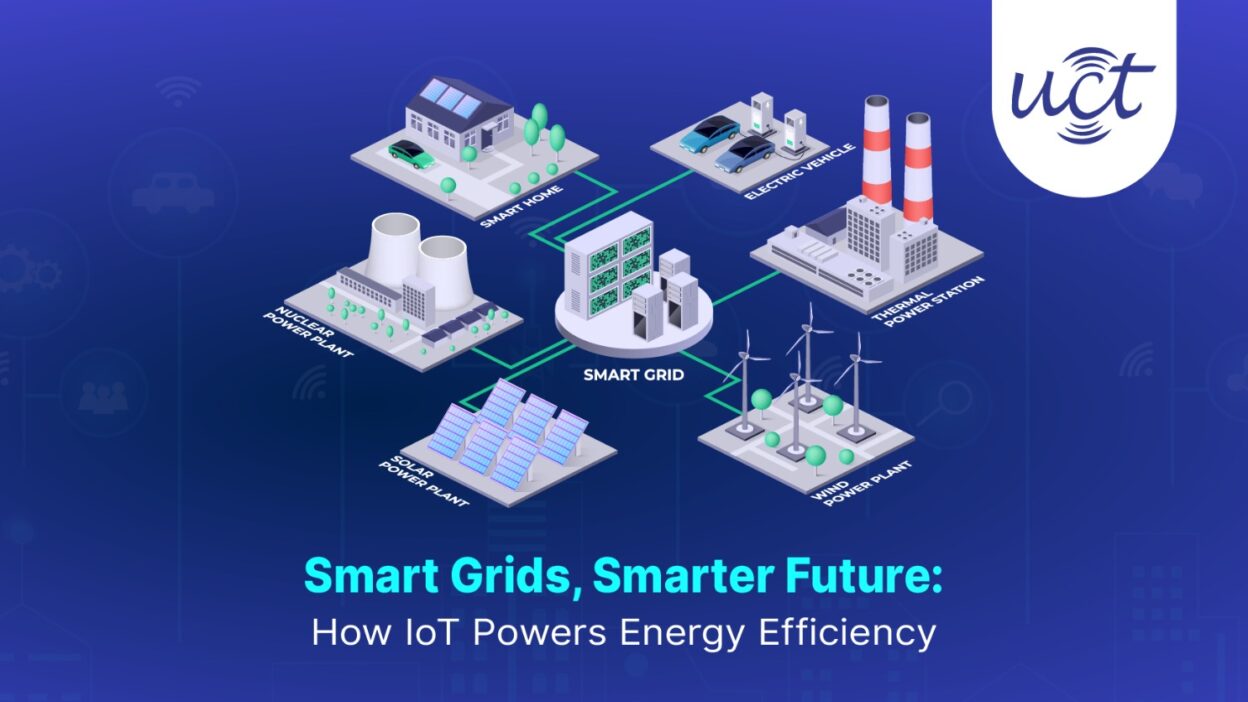
The Internet of Things (IoT) in the energy sector is a network of interconnected physical objects. Think of sensors, smart meters, appliances, and grid equipment, all fitted with software and internet connectivity. This setup allows them to communicate and share data with each other and with central systems.
Imagine giving the electrical grid a central nervous system. Instead of being a passive conduit pushing electricity outward, the grid becomes an active, thinking entity capable of monitoring and managing itself.
- Sensors on power lines can detect a potential fault before it triggers a widespread blackout.
- Smart meters provide real-time updates on your home’s energy consumption.
- Transformers can monitor their own operational health and signal when maintenance is needed.
This constant stream of information provides both utility companies and consumers with unparalleled insight and control over how energy is produced, delivered, and consumed. It’s the foundational technology for building a modern, intelligent grid.
The Practical Hurdles to IoT Adoption
While the potential of IoT is vast, implementing it comes with significant challenges. These are felt most acutely by utilities, small and medium-sized businesses (SMEs), and developing regions such as India and the Asia-Pacific (APAC).
- Significant Initial Investment: The cost of upgrading decades-old infrastructure with smart sensors, meters, and communication networks is substantial. For many organizations in the APAC region, this upfront expense is a primary roadblock.
- Interoperability and Standards: The IoT market is flooded with devices from countless manufacturers, many using different communication standards. Getting all these devices to communicate and work together seamlessly is a major technical puzzle.
- Cybersecurity Threats: A connected grid, by its nature, is more exposed to cyberattacks. Protecting this vital national infrastructure from malicious actors is a paramount concern that demands advanced security protocols.
- Managing Big Data: Millions of IoT devices generate an immense volume of data every second. Utilities must build robust systems to collect, store, process, and analyze this information to extract valuable insights.
- Regulatory Frameworks: The energy sector is heavily regulated. Innovative business models enabled by IoT, such as direct peer-to-peer energy sales, often outpace the development of laws needed to govern them.
Core Benefits of IoT for Greater Energy Efficiency
Surmounting these obstacles is crucial because the advantages of an IoT-enabled grid are game-changing. The most significant benefit is a dramatic improvement in energy efficiency at every stage.
| Benefit Category | How IoT Makes a Difference | Impact on Overall Efficiency |
|---|---|---|
| Operational Improvements | Real-time grid monitoring allows utilities to spot and fix power losses and identify equipment that is close to failing. | Reduces energy wasted during transmission and distribution, while also cutting maintenance costs and preventing costly downtime. |
| Grid Stability and Reliability | IoT helps manage the fluctuating output from renewable sources like solar and wind, ensuring a balanced and dependable power supply. | Prevents system-wide blackouts and brownouts, leading to more consistent and reliable power for all users. |
| Smarter Demand Management | Utilities can more accurately forecast and manage periods of peak energy demand, encouraging usage during off-peak times. | Reduces the reliance on expensive and less efficient “peaker” power plants that are only fired up to meet high demand. |
| Consumer Empowerment | People gain access to detailed data about their personal energy use, enabling them to make informed decisions and lower their monthly bills. | Encourages behavioral changes that lead to significant energy conservation at the household and community levels. |
Smart Grid IoT Solutions and System Architecture
A smart grid is not one single technology but a complex, layered system. Its architecture is designed to manage everything from data collection at the source to high-level analysis in the cloud.
- Device Layer: This is the physical foundation. It includes all the connected hardware: smart meters, sensors, smart appliances, electric vehicle chargers, and control systems for renewable energy assets.
- Connectivity Layer: This layer comprises the communication infrastructure that allows devices to send and receive data. It can include cellular networks (4G/5G), Wi-Fi, LoRaWAN, and other wireless protocols.
- Platform Layer (Edge & Cloud): This is where data is aggregated, processed, and stored. Edge computing handles time-sensitive processing near the device, while cloud platforms manage large-scale data analysis and long-term storage.
- Application Layer: This layer turns data into actionable insights and automated control. It includes the software for outage management, demand response programs, customer billing, and consumer-facing mobile apps.
The Role of IoT in Power Distribution and Automation
In the past, locating a fault in a distribution network was a slow, manual task. Utility crews often had to physically patrol miles of power lines to find the source of an outage.
IoT automates and streamlines this entire process. When a fault occurs, sensors can instantly identify its precise location. Automated switches, known as reclosers, can then intelligently reroute power around the problem area, restoring service to the majority of affected customers within seconds. This “self-healing” capability is a hallmark of a modern grid, dramatically reducing outage times and improving reliability.
Edge Computing: Powering Rapid Automation in Microgrids
Microgrids are localized power grids that can operate independently or while connected to the main grid. They provide a high degree of reliability for critical facilities like hospitals, military bases, or remote communities.
Edge computing is a vital component for microgrids. It involves deploying computing power at the “edge” of the network, close to the assets it manages. This proximity allows the microgrid to make decisions in milliseconds, such as disconnecting from the main grid during an outage and switching to local battery power. This rapid, localized control is essential for the resilience and stability that microgrids are designed to provide.
Smart Meters: Putting Energy Control in Consumers’ Hands
For most people, the smart meter is the most tangible part of the smart grid. Unlike older analog meters that required a manual reading once a month, smart meters track energy usage in near real-time (often in 15-minute intervals) and transmit this data directly to the utility.
This capability is a true revolution in consumer empowerment. For the first time, you have a clear, detailed picture of how and when your household uses energy. This allows you to:
- Pinpoint which appliances are consuming the most power.
- See how your daily routines affect your electricity bill.
- Shift activities like laundry or charging an EV to off-peak hours when electricity is cheaper.
Engaging Consumers with Gamification for Energy Savings
Simply providing data isn’t always enough to motivate change. To make energy conservation more engaging, many utilities are turning to gamification—using elements of game design to encourage savings.
This can take several forms:
- Friendly Competitions: Creating challenges between different neighborhoods to see which one can reduce its energy consumption the most.
- Rewards and Recognition: Awarding digital badges or even tangible rewards like gift cards for achieving specific energy-saving milestones.
- Personalized Recommendations: Analyzing a household’s usage patterns to provide tailored tips and advice for reducing waste.
These strategies help transform energy conservation from a chore into a more interactive and rewarding activity.
Monitoring and Integrating Renewable Energy with IoT
A key challenge with renewable energy sources like solar and wind is their intermittent nature. The sun doesn’t always shine, and the wind doesn’t always blow, creating variability that grid operators must manage.
IoT provides the necessary tools for this task. Sensors on wind turbines and solar farms continuously monitor weather conditions and energy output. This data is fed into sophisticated forecasting models that predict renewable energy generation with high accuracy. Armed with this information, grid operators can better integrate renewables and adjust other power sources to maintain a stable and reliable flow of electricity.
Peer-to-Peer Energy Trading with Blockchain
Imagine your rooftop solar panels generate more electricity than you need. What if you could sell that excess power directly to your neighbor? This concept, known as peer-to-peer (P2P) energy trading, is becoming a reality thanks to technologies like blockchain.
Blockchain offers a secure and decentralized ledger to record these energy transactions without needing a central intermediary. When combined with IoT-enabled smart meters that precisely measure energy flows, it creates a transparent, automated marketplace for local energy exchange. This empowers “prosumers”—individuals who both produce and consume energy—and has the potential to reshape the traditional utility business model.
IoT in Energy Management Systems (EMS) and Smart Cities
The principles of IoT-driven energy efficiency extend far beyond the grid, impacting entire buildings and cities.
- Energy Management Systems (EMS): In large commercial buildings, an EMS uses a network of IoT sensors to intelligently control lighting, heating, ventilation, and air conditioning (HVAC). The system can automatically adjust settings based on room occupancy, the time of day, and even external weather conditions to eliminate energy waste.
- Smart Cities: At a municipal level, IoT connects disparate urban systems to optimize energy use. Smart streetlights can dim when streets are empty, traffic signals can be synchronized to reduce vehicle idling, and city planners can monitor and manage overall energy consumption from a unified dashboard.
Securing the Grid: Data Privacy and Cybersecurity
Connecting the energy infrastructure to the internet introduces new vulnerabilities. A cyberattack on the smart grid could potentially cause widespread power outages or compromise sensitive customer data.
Protecting the grid requires a robust, multi-layered security strategy:
- Device-Level Security: Ensuring every sensor, meter, and controller has security features built in from the start.
- Network Encryption: Encrypting all data as it travels across the network to prevent interception.
- Strict Access Control: Implementing strong authentication and authorization protocols to limit who can access critical systems.
- Continuous Threat Monitoring: Using AI-powered tools to constantly scan the network for anomalies and potential threats in real time.
Data privacy is an equally important concern. Smart meter data can reveal intimate details about a person’s daily life. Strong regulatory policies are essential to ensure this data is used responsibly and ethically.
Automating Demand Response with IoT
Demand response (DR) programs are designed to reduce electricity consumption during times of peak demand. In the past, this often involved utilities making phone calls to large industrial clients.
IoT automates and democratizes this process. A utility can send a signal to participating smart devices in a home—such as a thermostat, water heater, or EV charger—to temporarily scale back their energy use. Customers are typically compensated for their participation. This automated approach helps balance the grid seamlessly without requiring any action from the consumer.
Managing New Loads with IoT-Driven Demand Response
The increasing adoption of high-consumption devices like electric vehicles (EVs), heat pumps, and smart appliances introduces new challenges for the grid. If everyone in a neighborhood plugs in their EV to charge at the same time after work, it could overload local infrastructure.
IoT-enabled smart charging provides an elegant solution. Your EV charger can communicate with the grid to determine the best time to charge, automatically scheduling the session for off-peak hours when demand is low and electricity is cheaper. This same principle of “load shifting” can be applied to other major appliances, turning these new loads into flexible assets that help stabilize the grid.
The Power of AI and Machine Learning in Energy
The true potential of smart grid data is realized when it’s combined with artificial intelligence (AI) and machine learning (ML).
- Advanced Load Forecasting: By analyzing vast datasets—including historical usage, weather forecasts, and even public events—AI algorithms can predict energy demand with remarkable accuracy. This allows utilities to optimize generation and minimize waste.
- Dynamic Pricing: Instead of fixed electricity rates, prices can adjust in real time based on supply and demand. IoT and AI work in tandem to manage these fluctuating prices and communicate them to smart devices, which can then automatically optimize their operation to reduce costs.
Real-World Applications and Case Studies
The smart grid revolution is well underway globally, with significant momentum in the Asia-Pacific region.
In India, the government’s National Smart Grid Mission is accelerating the deployment of smart meters nationwide. Utilities like Tata Power in Delhi are leveraging this technology for more efficient billing and to reduce power losses, helping to stabilize a grid under pressure from rapid economic growth.
In Australia, with its high penetration of rooftop solar, companies are using IoT platforms to aggregate thousands of home solar-and-battery systems into “virtual power plants.” These distributed networks can act as a single entity to provide stability and services to the main grid.
Future Trends: The Next Generation of Smart Grids
The smart grid continues to evolve. The next generation will be even more intelligent, automated, and decentralized.
We can expect wider use of AI for predictive maintenance, where grid equipment will forecast its own potential failures and schedule repairs. The rollout of 5G and future wireless technologies will enable even faster, more reliable communication for real-time control applications. Ultimately, the industry is moving toward an “energy internet”—a fully distributed network where energy and information flow as freely as data on the web today.
Conclusion: IoT’s Central Role in an Efficient Energy Future
The Internet of Things is not merely an upgrade to our energy system; it is a complete reimagining of it. By creating an intelligent, interconnected, and responsive power grid, IoT is unlocking new levels of efficiency at every point in the energy chain. It empowers utilities to cut waste, enables a seamless transition to renewable energy, and gives consumers direct control over their energy consumption.
The path to a fully realized smart grid is complex, but the destination promises a world with cleaner, more reliable, and more affordable energy for all. The small, connected devices being installed today are the fundamental building blocks of this smarter, more sustainable future.