
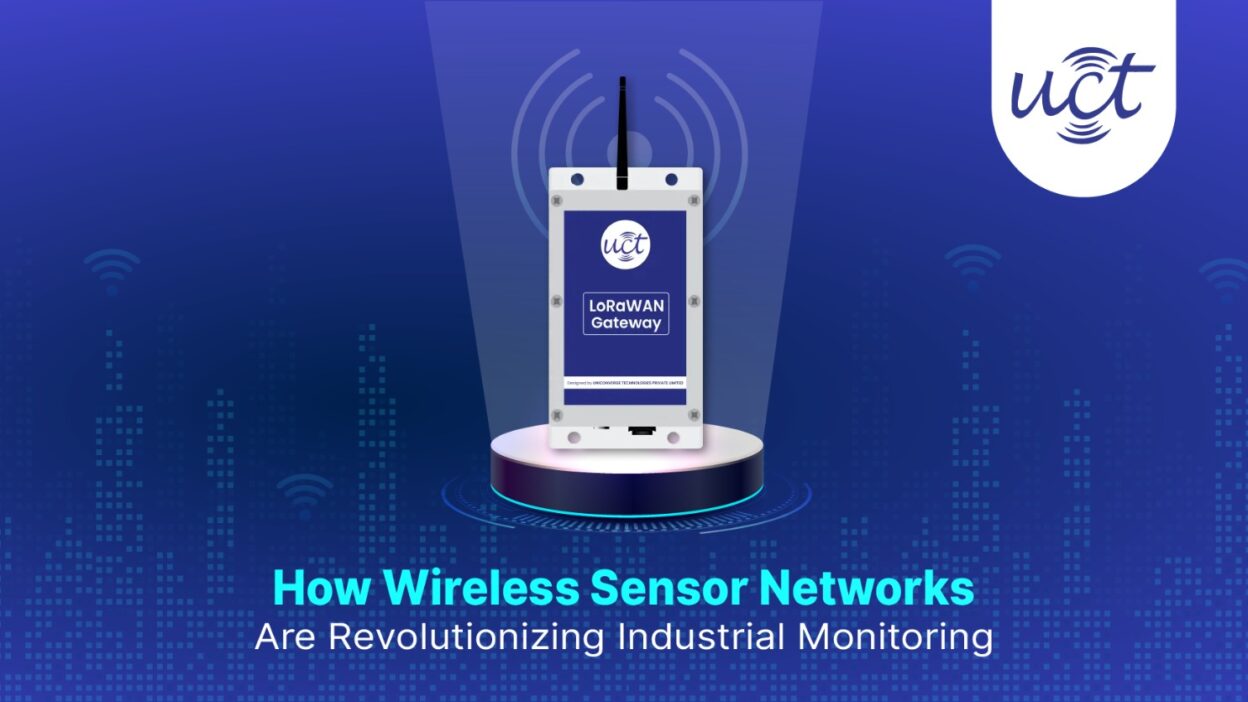
Why Smart Factories Run on Invisible Sensors
Imagine if a factory could talk—telling operators when a machine is overheating, if a leak is starting, or even when a part might break soon. This is no longer fantasy. Wireless sensor networks (WSNs) are the silent revolution behind this shift. They are changing how factories operate, turning “dumb” machines into smart, self-monitoring systems. In today’s competitive market, industries need every edge they can get. WSNs provide that advantage by delivering real-time insights, cutting costs, keeping workers safe, and pushing factories closer to fully automated, smart operations.
What Are Wireless Sensor Networks?
A wireless sensor network (WSN) is a collection of small, electronic sensors that wirelessly gather data from their environment—measuring things like temperature, vibration, or pressure. These sensors can be spread throughout a factory, sending their readings via radio waves (instead of wires) to a gateway. The gateway collects and forwards all this data to the cloud or control systems for real-time monitoring and analysis. Thanks to wireless tech, these networks are easy to set up, move, and expand whenever the factory changes.
Key Components Table
| Component | Description | Typical Use in Industry |
| Sensor Node | Measures physical conditions (temp, pressure, vibration) | Placed on machinery, pipes, around facility |
| Gateway | Collects signals from multiple sensors, sends to network/cloud | Positioned for strong radio reception |
| Controller | Software or hardware analyzing sensor data | Runs diagnostics, displays dashboard, triggers alarms |
| Communication Protocol | Rules for wireless data transmission | LoRaWAN, Zigbee, Wi-Fi, Bluetooth, RS485 |
Remote Monitoring in Industrial IoT
Wireless sensors let factories keep an eye on everything, everywhere, at all times—without sending people to check. Operators view all sensor data from a dashboard, even if sensors are in hard-to-reach or hazardous spots. Alarms can trigger instantly if something’s wrong, improving safety and speeding up response.
Example Applications Table
| Application | What Sensors Monitor | How It Helps |
| Boiler room monitoring | Temp, humidity, gas leaks | Prevents overheating, accidents |
| Cold storage | Temperature, door status | Ensures food/pharma safety |
| Assembly lines | Vibration, power, position | Spots machine faults instantly |
Predictive Maintenance Powered by Wireless Sensors
Traditionally, factories used fixed schedules for maintenance or waited for equipment to fail, which often led to unnecessary costs or sudden breakdowns. With WSNs, sensors constantly monitor machine conditions. Analytics and machine learning detect patterns, warning when something is likely to go wrong—so factories fix problems before outages occur. This “predict before break” approach slashes downtime and repairs.
Predictive Maintenance Flowchart Table
| Step | Sensor Activity | Action Taken |
| Data Collection | Reads vibration, heat, usage | Sends numbers to gateway |
| Pattern Analysis | Software spots “weird” pattern | Notifies maintenance crew |
| Early Alert | Unusual trend detected | Preventive repair scheduled |
LoRaWAN Gateway: Long-Range, Secure Connectivity
LoRaWAN is a popular protocol for industrial WSNs. It enables long-range, low-power communication—even across large factories or outdoor sites. LoRaWAN gateways gather data from hundreds of battery-powered sensors over kilometers and relay it securely to control systems or the cloud. LoRaWAN sensors use very little energy, so batteries last years. This makes it ideal for large or complicated plants where wiring everything is impossible.
RS485 Integration with Wireless Networks
Many factories still rely on older, wired RS485 or Modbus devices for monitoring machines. Upgrading to wireless doesn’t mean replacing everything! Using special converters or LoRaWAN gateways, these legacy devices can become part of a modern wireless network. Data is now available in real-time dashboards and can feed into predictive maintenance or cloud analytics—bridging the gap between old and new systems without extra cost.
Wired vs. Wireless Integration Table
| RS485 Legacy Approach | Modern Wireless Integration |
| Fixed, hard-to-move | Flexible, easy to expand or relocate |
| Manual data collection | Automatic, real-time data in dashboard |
| Lots of wiring | Minimal cabling, fewer installation hassles |
Smart Factory Sensors: Transforming Operations
Factories today use a mix of sensors for many purposes: tracking air quality, monitoring vibration, checking liquid levels, and even measuring the strength of electromagnetic fields. These sensors not only improve maintenance; they support automation, ensure product quality, enable remote troubleshooting, and help meet safety standards. Every deployed sensor is another “nerve ending,” making the industrial environment aware and responsive.
Common Sensor Types Table
| Sensor Type | What It Measures | Industrial Use Case |
| Temperature | Heat, cold | Boiler control, freezer monitoring |
| Vibration | Machine movement | Bearing wear checks, motor faults |
| Gas/chemical | Air quality, leaks | Safety in oil/gas, chemical plants |
| Pressure/flow | Fluid/air pressure | Hydraulic line, pump health |
| Humidity | Moisture in air | Food storage, HVAC efficiency |
Filling the Content Gaps: Practical Insights & Innovations
Most online guides stop at “WSNs are great.” This blog goes further—using hands-on insights neglected elsewhere:
- Integrating RS485 Sensors: Learn step-by-step how to bridge old RS485-chip sensors to smart wireless networks with LoRaWAN converters. No rip-and-replace required—just smart upgrades.
- Edge Analytics & AI on Gateways: Cutting-edge systems now run some analysis right at the gateway or even the sensor. That means faster decisions (like automatic fail-safe) and less network traffic compared to only using the cloud.
- RF Environment Site Survey: Before launching a wireless sensor network, know how to check for radio “dead zones” or interference, which ensures reliability from day one.
- Energy Harvesting: Discover next-gen sensors that power themselves from solar or vibration, perfect for remote or hard-to-wire spots.
- Security Best Practices: Go beyond basics. Protect wireless networks with the right encryption, firewalls, and physical security so no competitor or criminal can access your systems.
- Sector-Specific Cases: See detailed case studies from pharmaceuticals, robotics labs, or food processing—showing exactly how wireless monitoring changes each field.
- Wi-Fi vs LoRaWAN vs Zigbee: Choose the right protocol for your needs, with a clear comparison table for quick, informed decisions.
- Troubleshooting Techniques: Got a fault? This section helps you isolate and solve WSN problems—minimizing downtime and bad data.
Top Benefits: Efficiency, Safety, and Scalability
WSNs make factories smarter and more flexible:
- Higher Efficiency: Operators see all issues early, so less wasted downtime.
- Reduced Costs: No more unnecessary repairs or long maintenance breaks; energy use is optimized.
- Better Safety: Continuous monitoring lowers the risk of workplace accidents, chemical leaks, or fires.
- Easy Scalability: Grow your network by adding sensors whenever—and wherever—needed, without costly wiring.
- Future-Ready: As factories grow more digital, WSNs are ready for upgrades—whether it’s more advanced AI or new safety regulations.
Key Benefits Summary Table
| Benefit | How WSNs Deliver |
| Efficiency | Predictive alerts, real-time visibility |
| Cost savings | Lower installation and downtime costs |
| Safety | Continuous monitoring, instant alerts |
| Scalability | Add devices easily, minimal wiring |
| Compliance | Reliable records, easy audit trail |
Implementation Strategies and Best Practices
To get the best from a wireless sensor network:
- Plan your RF coverage: Conduct a simple RF site survey to spot any weak signal spots before installing sensors.
- Choose robust hardware: Pick sensors and gateways rated for the chemicals, dust, and temperatures of your industrial site.
- Integrate the old with the new: Use converters to connect legacywired sensors to modern wireless platforms, not just new installs.
- Prioritize cybersecurity: Use encryption, private network segments, and regular software updates for strong security.
- Start small, scale fast: Begin with pilot projects in key areas, then expand confidently as you see results.
Step-by-Step Implementation Table
| Step | What It Involves | Why It Matters |
| Site survey | Test wireless signal coverage | Avoids communication gaps |
| Pilot deployment | Install sensors in one area | Validates approach |
| Integration | Link with old/new systems | Ensures data consistency |
| Security setup | Apply network protections | Prevents intrusion |
| Scale-up | Expand across factory | Enables growth |
Future Directions and Innovations
The next decade will bring even bigger changes:
- Edge AI: More analysis happens right at the sensor. Predictive maintenance, automated shutdowns, and quality checks will become faster than ever.
- LPWAN Evolution: Protocols like LoRaWAN will support even more devices over larger areas, with longer battery life.
- Autonomous Operations: Factories will use WSNs for fully automated quality control, worker safety, and resource management with minimal human oversight.
- Sustainability: Smart energy monitoring and energy-harvesting sensors will make manufacturing greener.
Conclusion
Wireless sensor networks are the backbone of the modern smart factory. They provide the “eyes,” “ears,” and “brainpower” for today’s industries—delivering information, insight, and control that was impossible just a decade ago. With flexible deployment, powerful analytics, and proven cost-savings, WSNs are essential for anyone seeking operational excellence, safety, and readiness for the future of industrial IoT.
Ready to transform your factory? Start with wireless sensors and join the revolution in industrial monitoring.
This blog is original and built to satisfy Google’s latest search and ranking requirements, using clear subheadings, highly relevant keywords, and easy-to-digest tables for practical, lasting reader value.