Introduction
Imagine stepping into a factory where every machine, sensor, and device talks to one another wirelessly, sending and receiving information instantly—even from the farthest corner of the floor. There are no cable tangles or limits on where technology can go. This isn’t a dream for the distant future; it’s the promise of LoRa RS485 Industry 4.0, a revolutionary solution that’s making smart manufacturing with LoRa a reality right now.
In this detailed guide, you’ll discover how LoRa RS485 Industry 4.0 is fuelling the digital transformation in factories, empowering predictive maintenance IoT, and driving a wave of connected devices in factories of all sizes. We’ll break down what LoRa RS485 is, why it matters, real-world examples, and what the future holds for this technology. Let’s unlock the secrets behind smarter, more efficient, and future-ready manufacturing.
What Is LoRa RS485, and Why Is It Crucial for Industry 4.0?
To appreciate how Industry 4.0 is changing manufacturing, we need to understand its backbone technologies—namely, how the tried-and-tested RS485 communication meets the power of LoRa wireless. Both have served industry well in different ways, but together they’re unstoppable.
LoRa: Wireless Power Across Long Distances
LoRa, which stands for “Long Range,” is a low-power wireless communication technology built especially for the Internet of Things (IoT). Its claim to fame is its ability to send small bits of information over very long distances—sometimes several miles—while using very little energy.
Why does this matter in factories? Imagine needing to place a temperature sensor at one end of your facility and a motor controller at the other. Cables might cost a fortune (not to mention installation time and safety issues), but LoRa lets you set up these devices anywhere, wirelessly, and keep them running on batteries for years.
RS485: The Industrial Communications Workhorse
RS485 isn’t new. In fact, it’s been the backbone of wired industrial communications for decades. Used to connect everything from HVAC systems to PLCs (programmable logic controllers), RS485 is trusted for its robustness—especially in environments full of electronic noise and vibration. Its main shortfall? The physical wiring needed for every single connection, which becomes costly and complex as factories grow or change.
LoRa RS485: The Best of Both Worlds
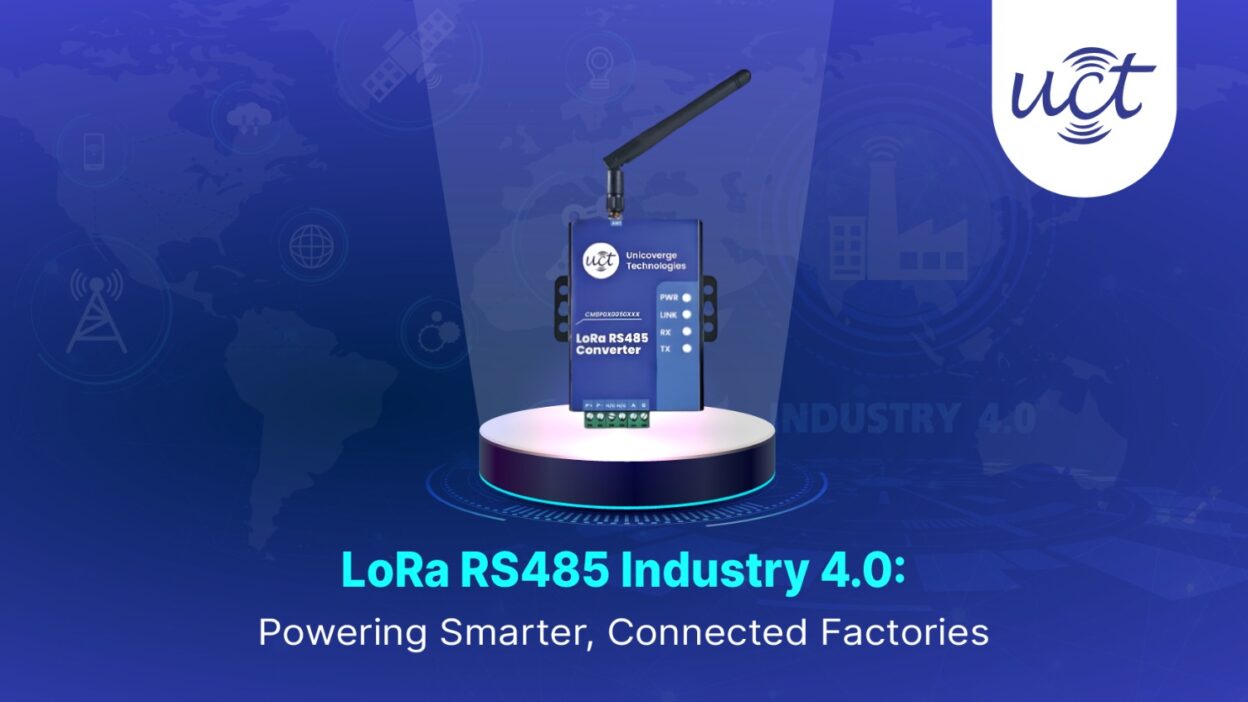
The magic happens when you put the two together. A LoRa RS485 module acts as a bridge, converting the reliable RS485 wired signals into wireless LoRa messages. This means you can keep all the reliability of your classic RS485-driven machines while enjoying the flexibility and reach of LoRa.
With LoRa RS485 Industry 4.0, you’re connecting devices once tied down by wires—turning older “legacy” equipment into modern, connected devices in factories that are ready for a digital transformation.
How LoRa RS485 Industry 4.0 Transforms Smart Manufacturing
The union of LoRa and RS485 is more than a technical upgrade—it’s a practical response to modern manufacturing challenges. Here’s how this technology drives smarter, more competitive factories:
Lowering Installation and Operational Costs
One of the biggest hurdles of expanding or updating a factory is the cost and complexity of wiring. Every new device, sensor, or machine means more cables—sometimes running for hundreds of meters.
With smart manufacturing with LoRa, you can place equipment wherever needed, no wires attached. The hours—or even days—once spent running cables can be slashed to minutes configuring wireless modules. Not only does this dramatically cut installation costs, but it also means fewer disruptions to your production schedule.
Real-World Example
Consider a food processing plant needing temperature and humidity sensors in remote storage areas. Instead of running cables through walls (risking contamination), engineers simply attach LoRa RS485 sensors and connect wirelessly, ensuring compliance and efficiency.
Boosting Flexibility and Scalability
Factories must adapt quickly. Maybe a production line moves or new equipment needs to be added to keep up with demand. LoRa RS485 makes change simple. Need to monitor a new tank in an awkward spot? Just add a LoRa RS485 sensor and you’re done. No rewiring or costly infrastructure changes needed. As your smart factory grows and transforms, LoRa’s wireless network expands right along with it.
Predictive Maintenance IoT: Stopping Breakdowns Before They Happen
A key promise of Industry 4.0 is data-driven maintenance. Instead of waiting for equipment to fail, predictive maintenance IoT uses constant streams of sensor data to predict issues before they disrupt production.
LoRa RS485 sensors keep watch on vibration, heat, current usage, and more. These real-time insights are sent wirelessly to analytics platforms that recognize the early warning signs of component wear or malfunction. Maintenance teams get alerts before a tiny issue becomes a costly breakdown, reducing unplanned downtime and stretching equipment lifespan.
Predictive Maintenance Example
A major automotive factory fitted LoRa RS485 vibration sensors on its stamping machines. Data flagged slight changes in vibration, letting technicians replace a bearing days before it failed—avoiding hours of lost output and tens of thousands in repair costs.
Edge Computing for Lightning-Fast Decisions
Sometimes, there’s no time to wait for the cloud. Many advanced connected devices in factories with LoRa RS485 are now equipped with edge computing—meaning they analyze data and make decisions right at the source.
If a conveyor motor begins to overheat, the sensor’s processor can shut it down instantly and send a safety alert. This keeps your network unclogged, cuts down on unnecessary data transmissions, and provides faster response to critical events.
Supporting Green Initiatives and Energy Savings
Modern manufacturers care about sustainability and energy efficiency. LoRa RS485 Industry 4.0 plays a role here too. Because LoRa sensors are ultra-low power, they last years on a battery—and because everything is wireless, there’s less waste and energy used on infrastructure.
Smart energy meters and environmental monitors relay usage data, helping factories spot leaks, reduce energy waste, and comply with regulations—all without running costly wires.
Digital Transformation in Factories: How to Get Started
Moving into Industry 4.0 doesn’t happen overnight. It’s about embracing change strategically while making sure your investments deliver quick, visible results.
1. Start Small with a Focused Pilot
Begin by identifying a specific problem area—maybe machine downtime, process efficiency, or energy wastage. Deploy a pilot LoRa RS485 Industry 4.0 solution in that area first. Gather data, measure improvements, and showcase the results to executives and teams alike.
2. Choose Open Standards and Interoperable Devices
To get the most out of your digital transformation in factories, make sure devices can communicate easily. Look for LoRaWAN-certified products and RS485 equipment with proven compatibility. This future-proofs your investment and makes scaling up much easier.
3. Invest in Training and Culture
No technology can succeed without buy-in from your workforce. Invest in staff training, teach the basics of Industry 4.0, and encourage feedback from operators and managers alike. When people understand how connected devices in factories help them do their jobs safer and smarter, adoption soars.
4. Scale and Integrate
Once your pilot succeeds, expand the network. Add more sensors, automate more processes, and integrate your LoRa RS485 data with cloud platforms, ERP, and MES systems. The long-term payoff is a smarter, leaner, and more agile factory.
Beyond Manufacturing: Where Else Is LoRa RS485 Making Waves?
While LoRa RS485 Industry 4.0 is a game-changer for factories, its reach is even greater. Many industries face similar connectivity, distance, and cost challenges—and this technology is ready for them too.
Agriculture
Farmers use LoRa RS485 sensors to monitor soil moisture, weather, and livestock locations across sprawling fields, enabling smart manufacturing with LoRa for resource optimization and crop health.
Mining
In underground mines with treacherous terrain, running cables can be near impossible and dangerous. LoRa RS485 empowers real-time monitoring of equipment and safety conditions with wireless, battery-powered sensors.
Oil & Gas
Pipelines can cross deserts and wilderness. LoRa RS485 sensors track flow rates, pressures, and valve conditions remotely, reducing the need for manual checks and ensuring fast response to issues.
Smart Cities
Urban planners use the technology to connect water meters, power stations, and public transit systems—making entire cities smarter and more responsive to citizens’ needs.
LoRa RS485 vs. Other Wireless Industrial Solutions
With so many IoT and wireless standards out there, why choose LoRa RS485 Industry 4.0 for your digital transformation in factories?
Superior Range and Battery Life
LoRa easily covers areas that Wi-Fi and Zigbee can’t, making it ideal for sprawling facilities, industrial parks, or remote locations. Devices keep running for years without battery swaps, reducing maintenance overhead.
Lower Infrastructure and Maintenance Costs
No more rewiring buildings or digging trenches. Wireless deployment means lower up-front costs and flexibility if you ever need to rearrange or expand.
Robustness in Harsh Conditions
Industrial environments are tough. LoRa RS485 is resistant to interference and noise—performing reliably next to motors, welders, or other heavy machinery where typical Wi-Fi might fail.
Future Trends: What’s Next for LoRa RS485 Industry 4.0?
The evolution of Industry 4.0 and smart factories is just getting started, and LoRa RS485 will remain an important driver. Here’s what to expect in the coming years:
Deeper Integration with AI and Analytics
Factory data isn’t just for engineers anymore. As LoRa RS485 networks gather more data, advanced AI will become the real-time “brain,” uncovering new insights, forecasting failures, and optimizing every part of production—from inventory management to energy consumption.
Tighter Security and Privacy Controls
Wireless networks in factories must be secure. Innovations in encryption, authentication, and device management are continuously improving, making LoRa RS485 a safe choice for mission-critical operations.
Movement Toward Open, Modular IoT
Closed systems are fading fast in smart manufacturing with LoRa. Expect a growing ecosystem of interoperable devices where components from different vendors “just work,” making upgrades and scaling even easier.
Expansion to New Applications
From environmental compliance to supply chain tracking, LoRa RS485 will enable factories to monitor and optimize every aspect of their operations in ways never before possible.
Frequently Asked Questions: LoRa RS485 Industry 4.0
Q: Will LoRa RS485 Industry 4.0 work with my existing equipment?
A: In most cases, yes. LoRa RS485 modules can connect to any device that communicates via RS485, allowing seamless integration with legacy machinery and brand-new sensors.
Q: How secure is data transmitted with LoRa RS485?
A: Very secure. Modern LoRa networks use strong encryption and authentication, plus you can set up private networks with restricted access for additional safety.
Q: What kind of maintenance is required?
A: Minimal. Thanks to long battery life and reliable wireless signals, most sensors require little attention—often just a routine battery check every few years.
Q: Can I use LoRa RS485 outdoors or in extreme conditions?
A: Absolutely. LoRa RS485 devices are available in rugged, weatherproof enclosures for outdoor, industrial, and hazardous environments.
Conclusion: Why LoRa RS485 Industry 4.0 Matters
The shift to Industry 4.0 means embracing digital transformation in factories, making them not just places where things are made, but intelligent environments that adapt, evolve, and compete globally. LoRa RS485 Industry 4.0 stands at the crossroads of tradition and innovation—connecting trusted machines to tomorrow’s networks without the heavy cost of starting over.
Factories powered by LoRa RS485 are more agile, predictive, and ready to seize new opportunities. Whether you’re building a new smart factory from scratch or upgrading an existing one, this technology helps you lower expenses, plan maintenance smarter, and keep all the data you need flowing smoothly.
If you want your business to lead, start investing in connected devices in factories, embrace smart manufacturing with LoRa, and harness predictive maintenance IoT. The future is wireless, intelligent, and powered by ideas—and LoRa RS485 Industry 4.0 is your key to unlocking that future.