Introduction
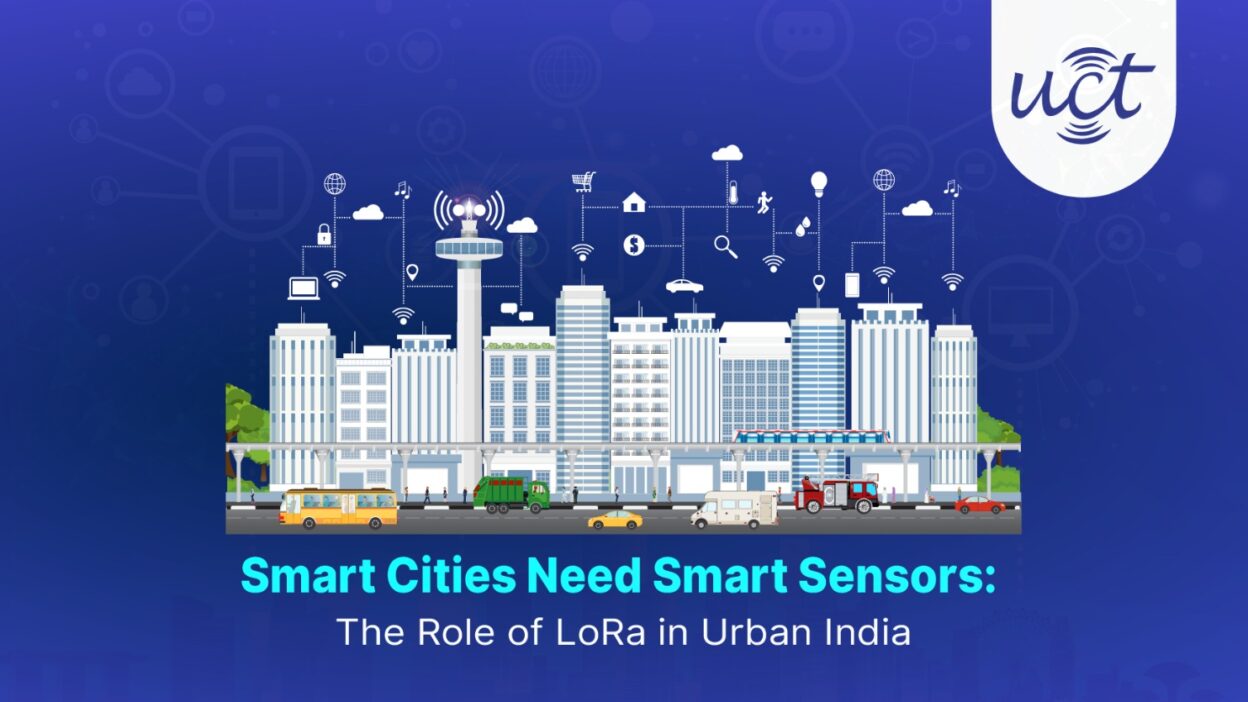
Imagine a city where streetlights automatically dim when roads are empty, water leaks are detected before they cause wastage, and air quality is monitored in real-time to protect public health. This is the vision of smart cities, and at the heart of this transformation are smart sensors—the backbone of urban IoT (Internet of Things) networks.
For India, a country with rapidly growing urban centers, the need for efficient, scalable, and cost-effective IoT solutions is critical. This is where LoRa (Long Range) technology steps in as a game-changer. LoRa enables smart sensors to operate efficiently, even in challenging urban environments, making it a key enabler for India’s smart city initiatives.
In this article, we’ll explore how LoRa technology is revolutionizing urban India, its unique advantages, and its role in driving sustainability and innovation.
Understanding LoRa Technology
What is LoRa and LoRaWAN?
LoRa (Long Range) is a wireless communication technology designed specifically for IoT applications. It operates on unlicensed radio frequency bands and is known for its low power consumption, long-range connectivity, and cost-effectiveness.
N (LoRa Wide Area Network) is the network protocol that enables devices to communicate with each other and with central systems.
| Feature | LoRa Technology |
| Range | Up to 15 km in rural areas, 3-5 km in urban areas |
| Power Efficiency | Battery life of up to 10 years |
| Cost | Low deployment and operational costs |
| Scalability | Supports thousands of devices per gateway |
Why LoRa is Ideal for Urban India
India’s urban environments present unique challenges, such as high population density, diverse geography, and resource constraints. LoRa’s features make it particularly suitable for these conditions:
- Wide Coverage: LoRa can penetrate buildings and cover large areas, making it ideal for dense urban settings.
- Battery Efficiency: Devices can operate for years without frequent battery replacements, reducing maintenance costs.
- Affordability: LoRa’s low-cost infrastructure is a perfect fit for budget-conscious smart city projects.
Key LoRa Deployments in Indian Smart Cities
Major Players and Ecosystems
Several organizations are driving LoRa adoption in India. Tata Communications has established a nationwide LoRaWAN network, while companies like Actility and Uniconverge Technologies provide IoT solutions tailored for Indian cities.
Government Initiatives
The Indian government’s Smart Cities Mission has been a catalyst for IoT adoption. Policies and funding support have encouraged the deployment of LoRa-based solutions in areas like waste management, traffic control, and public safety.
Real-World Examples
- Pune: LoRa sensors are used for smart street lighting, reducing energy consumption by 50%.
- Jamshedpur: LoRa-enabled water management systems have minimized water wastage.
- Amritsar: Air quality monitoring devices powered by LoRa provide real-time data to improve public health.
LoRa-enabled Urban IoT Use Cases
1. Smart Street Lighting
LoRa sensors enable streetlights to adjust brightness based on traffic flow and ambient light. This reduces energy consumption and extends the lifespan of lighting infrastructure.
2. Water and Waste Management
LoRa sensors monitor water levels, detect leaks, and optimize waste collection routes. This ensures efficient resource utilization and minimizes environmental impact.
3. Air Quality Monitoring
LoRa-enabled devices track pollutants like PM2.5 and PM10, providing actionable insights for improving air quality.
4. Public Safety
Wearables with LoRa GPS modules enhance public safety by enabling real-time tracking of individuals, especially in crowded areas or during emergencies.
5. Smart Parking and Traffic Management
LoRa sensors in parking lots and traffic signals streamline vehicle movement, reducing congestion and fuel consumption.
| Use Case | Benefits |
| Smart Street Lighting | Energy savings, reduced maintenance |
| Water Management | Leak detection, resource optimization |
| Air Quality Monitoring | Real-time data, improved public health |
| Public Safety | Enhanced tracking, emergency response |
| Traffic Management | Reduced congestion, fuel efficiency |
Integrating LoRa with Smart Energy and Grid Solutions
Role in Smart Grids
LoRa sensors play a crucial role in modernizing electricity grids. They enable real-time monitoring of energy consumption, outage detection, and load balancing.
IoT-enabled Energy Management
LoRa devices facilitate demand forecasting and renewable energy integration, ensuring a stable and efficient energy supply.
AI and LoRa Synergy
The combination of AI and LoRa IoT opens new possibilities, such as predictive maintenance, dynamic pricing, and enhanced cybersecurity.
Impact on Urban Energy Efficiency and Sustainability
Energy Savings and Emission Reductions
LoRa IoT solutions significantly reduce energy wastage, contributing to lower carbon emissions. For instance, smart street lighting alone can cut energy use by up to 50%.
Clean Energy Adoption
By providing better grid intelligence, LoRa accelerates the integration of renewable energy sources like solar and wind.
Alignment with Sustainable Development Goals
LoRa-powered smart city projects align with India’s goals for sustainable development, improving both environmental outcomes and citizen quality of life.
Challenges and Future Prospects
Key Challenges
- Interoperability: Ensuring seamless communication between devices from different manufacturers.
- Data Security and Privacy: Protecting sensitive information in IoT networks.
- Scalability: Expanding networks to accommodate growing urban populations.
Need for Collaboration
A robust ecosystem involving government, industry, startups, and communities is essential for overcoming these challenges.
Future Trends
- 5G Integration: Combining LoRa with 5G for enhanced connectivity.
- Edge Computing: Processing data closer to the source for faster decision-making.
- AI-driven Insights: Leveraging AI for smarter, more efficient IoT applications.
Conclusion
Smart cities are the future of urban living, and smart sensors are the backbone of this transformation. LoRa technology, with its unique advantages, is playing a pivotal role in enabling IoT networks across Indian cities. From energy savings to improved public safety, the benefits are immense.
At Uniconverge Technologies, we are committed to driving this transformation by providing cutting-edge IoT solutions tailored for India’s smart cities. Whether it’s smart street lighting, water management, or air quality monitoring, our expertise in LoRa technology ensures scalable, efficient, and sustainable solutions.
It’s time for stakeholders—governments, businesses, and citizens—to embrace LoRa and accelerate the adoption of smart sensor technologies. Together, we can build a smarter, more sustainable urban India.