Introduction: A New Era of Business Evolution
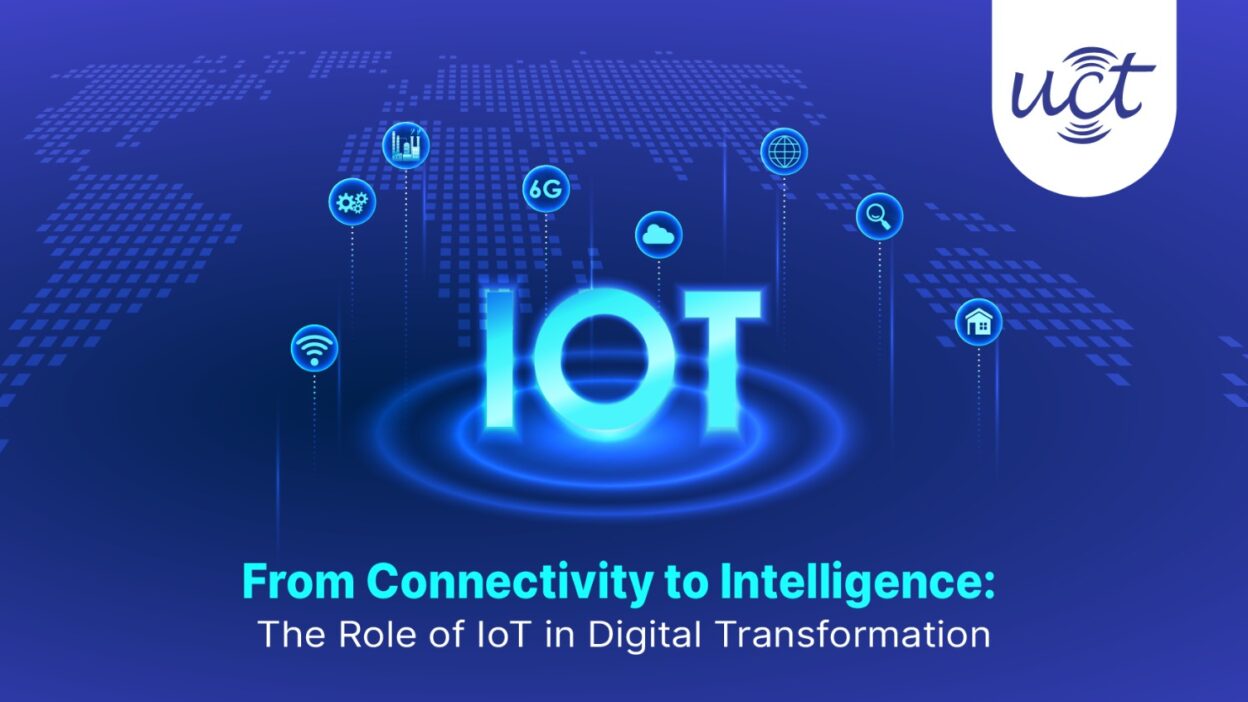
Today, businesses are racing toward digital transformation—a shift that reshapes processes, customer experience, and operational efficiency in extraordinary ways. At the heart of this evolution lies the Internet of Things (IoT), a powerful technology that goes beyond merely connecting devices; it drives smart automation, real-time data insights, and business intelligence like never before. This blog explores how IoT transforms businesses from simple connectivity to intelligent decision-making and competitive advantage.
IoT: The Backbone of Digital Transformation
Imagine a network where physical devices—smart sensors, LoRa devices, and IoT gateways—communicate seamlessly to create a connected ecosystem. IoT forms this backbone, linking devices of all kinds through Low-Power Wide Area Network (LPWAN) solutions, such as LoRaWAN, allowing for broad coverage with low energy use. These smart sensors collect data on temperature, movement, and other key parameters that matter most to your business operations.
Key IoT Technologies at a Glance
| Technology | Role | Advantage |
| Smart Sensors | Data collection from the physical environment | Real-time monitoring with accuracy |
| IoT Gateways | Aggregation and transmission of sensor data | Secure and reliable connectivity |
| LoRa Devices | Long-range, low-power communication | Cost-effective large area coverage |
| LPWAN Solutions | Network infrastructure for IoT devices | Energy-efficient and scalable connectivity |
This ecosystem enables companies to capture detailed operational data that forms the foundation for transformation.
From Data Collection to Cloud-Based Analytics
Collecting data alone doesn’t drive change—it’s what businesses do with it that counts. Once captured by IoT devices, the data streams into cloud-based analytics platforms. These cloud systems process, analyze, and visualize data to unlock actionable insights.
Cloud-based IoT analytics can detect patterns, forecast trends, and automate responses. For example, a manufacturing line can use real-time sensor data to adjust machine settings or predict maintenance needs before breakdowns occur, optimizing efficiency and reducing downtime.
Automation Powered by IoT
Automation is a key engine of digital transformation powered by IoT. By integrating sensor data with automated control systems, businesses can streamline operations—whether it’s adjusting lighting in smart buildings, managing fleets in transportation, or optimizing supply chains.
Benefits of IoT-driven automation include:
- Enhanced operational efficiency
- Reduced human error
- Lower operational costs
- Predictive maintenance to avoid costly failures
Imagine a factory where machines alert technicians before failure or a logistics firm tracking vehicle conditions in real time. This automation elevates business agility to new levels.
Building Connected Ecosystems
Successful transformation depends on building connected ecosystems where devices, cloud services, applications, and users work in harmony. Interoperability enables diverse IoT technologies and protocols to communicate effortlessly, while scalability ensures the system grows with business needs.
Uniconverge Technologies specializes in creating such ecosystems with protocol-agnostic IoT solutions, combining LoRaWAN devices, gateways, and cloud analytics to help businesses scale digitally without constraints.
Deep Dive into the IoT Ecosystem and Its Business Impact
Understanding IoT’s ecosystem gives clarity on its vast impact. It consists of:
- Devices (Smart Sensors, Actuators): Capture and sometimes act on data.
- Network & Connectivity: Using technologies like Wi-Fi, 5G, LoRaWAN to transfer data.
- Gateways: Intermediate points that aggregate and send data to the cloud for analysis.
- Cloud Platforms: Process data with analytics and machine learning to generate insights.
- Applications & UI: Dashboards and apps through which users monitor and control IoT systems.
How IoT Drives Business Outcomes
| Impact Area | Description | Example |
| Enhanced Productivity | Automating routine tasks and remote monitoring | Predictive maintenance reducing machine downtime |
| Cost Efficiency | Optimizing resource usage and energy savings | Smart meters lowering utility bills |
| Customer Experience | Personalized services based on data insights | Tailored marketing through location-aware IoT data |
| New Business Models | Data monetization and IoT-driven innovation | Usage-based insurance policies in automotive |
| Sustainability | Energy and resource-efficient operations | Smart agriculture reducing water wastage |
Statistics That Highlight IoT’s Growing Role
By 2025, IDC predicts over 55.7 billion connected IoT devices worldwide will generate nearly 80 zettabytes (ZB) of data—a scale that shows how essential IoT will be in powering the next phase of digital transformation.
Sector-Specific Digital Transformation Examples
IoT is transforming various sectors uniquely:
- Healthcare: Remote patient monitoring and telemedicine offer better care and operational efficiency.
- Manufacturing: IIoT (Industrial IoT) enables predictive maintenance, reducing costly downtimes.
- Agriculture: Smart irrigation systems use sensor data to conserve water and boost crop yields.
- Smart Cities: Integrated IoT manages traffic, waste, and utilities efficiently.
Challenges and Considerations for IoT-Driven Digital Transformation
Despite all advantages, IoT deployment faces hurdles such as:
- Data Security: Protecting massive IoT data pools from breaches.
- Integration: Seamlessly connecting new IoT systems with legacy infrastructure.
- Skill Gaps: Finding and training talent skilled in IoT and analytics technologies.
Choosing the right IoT partner who understands these challenges and offers scalable, secure solutions is critical.
Conclusion: Embracing the Future with IoT and Uniconverge
IoT is no longer just about connecting devices. It is about driving intelligence, automation, and agility across business operations. With smart sensors, cloud analytics, and a connected ecosystem, businesses can unlock the true potential of digital transformation—leading to improved efficiency, innovation, and competitive edge.
Partnering with Uniconverge Technologies ensures a seamless journey from connectivity to intelligence, making your digital transformation ambitions a reality.