What Is Smart Agriculture Using IoT?
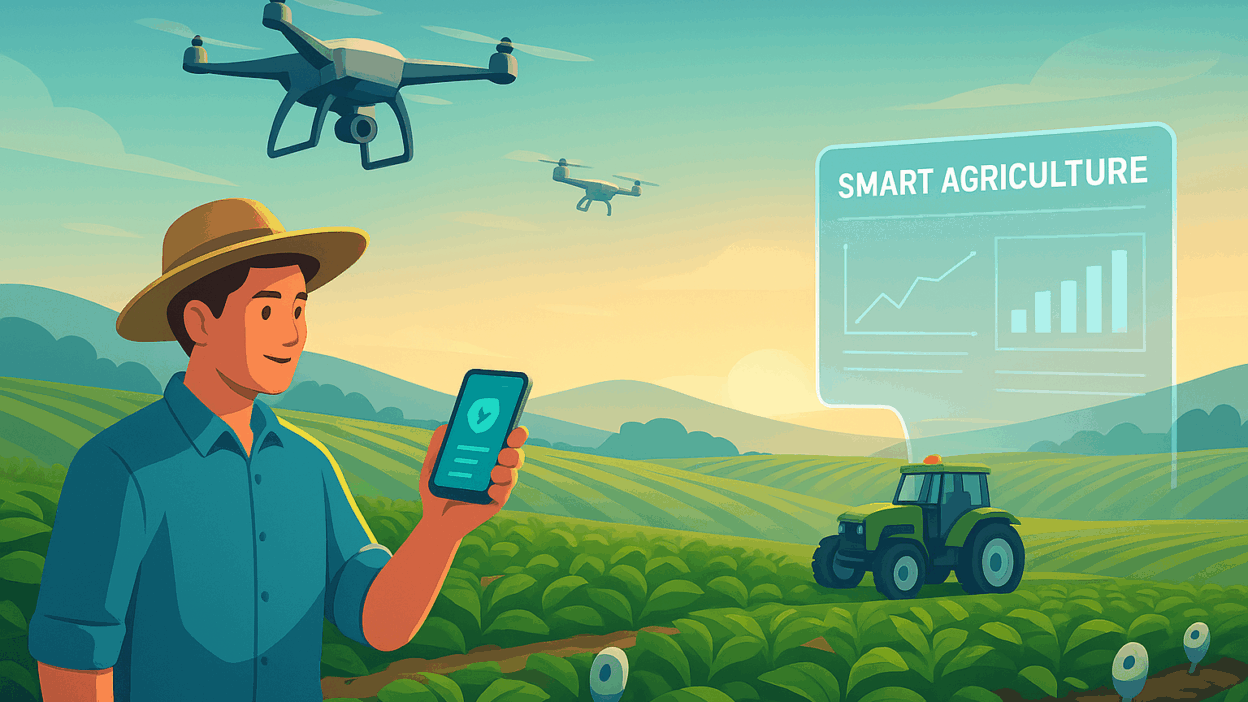
Smart agriculture using IoT connects your farm to the digital world through sensors, networks, and smart machines. These devices collect data from your soil, crops, equipment, and local climate conditions 24/7.
Here’s how it works:
- IoT sensors measure soil moisture, temperature, and nutrient levels
- Smart cameras monitor crop health and detect pests
- Weather stations provide hyperlocal forecasts
- Connected machinery operates with GPS precision
- Mobile apps give you remote control and instant alerts
The result? You get real-time insights that help you water crops exactly when needed, apply fertilizer with surgical precision, and spot problems before they become disasters.
The Game-Changing Benefits of Smart Agriculture Using IoT
1. Precision Farming and Resource Optimization
Traditional farming often means applying water and fertilizer uniformly across entire fields. Smart agriculture using IoT changes this completely.
IoT sensors create detailed maps of your fields, showing exactly where soil is dry, where nutrients are lacking, and which areas need attention. Variable rate technology then applies inputs only where needed.
Real-world impact:
- Reduce fertilizer use by up to 30% while maintaining yields
- Cut water consumption by 25-40% through targeted irrigation
- Lower input costs by $50-100 per acre annually
Farmers using precision agriculture report savings of thousands of dollars per season. The sensors pay for themselves within two growing seasons for most operations.
2. Increased Crop Yields and Productivity

Continuous monitoring through smart agriculture using IoT means problems get caught early. Sensors detect stress signals in plants before you can see them with the naked eye.
Key monitoring capabilities include:
- Soil health tracking – pH levels, nutrient content, compaction
- Plant stress detection – early signs of disease or pest damage
- Growth pattern analysis – optimal planting and harvest timing
- Automated equipment – precise seeding, spraying, and harvesting
Early detection leads to faster treatment and better outcomes. Many farmers see yield increases of 10-20% within their first year of implementation.
3. Water Conservation and Sustainability
Water scarcity affects farming worldwide. Smart agriculture using IoT helps you use every drop efficiently through intelligent irrigation systems.
Soil moisture sensors trigger irrigation only when plants need water. Weather data prevents watering before rain. ET (evapotranspiration) calculations ensure you apply exactly the right amount.
Conservation benefits:
- Reduce water usage by 25-50%
- Prevent overwatering that leads to nutrient runoff
- Maintain optimal soil moisture for plant health
- Meet sustainability certifications and regulations
California almond growers using smart irrigation report saving 2-3 acre-feet of water per acre annually—worth thousands in water costs alone.
4. Cost Reduction and Profitability
Labor costs continue rising, but automation through smart agriculture using IoT helps control expenses. Automated systems handle routine tasks, freeing you to focus on strategy and planning.
Cost-saving opportunities:
- Reduced labor needs – automated monitoring and alerts
- Lower input costs – precise application of fertilizers and pesticides
- Equipment optimization – preventive maintenance alerts
- Energy savings – efficient pump and motor operation
Mid-size farms typically see operating cost reductions of 15-25% after implementing IoT systems. The investment usually pays back within 3-4 years.
5. Food Quality and Traceability
Consumers demand transparency about their food. Smart agriculture using IoT provides complete traceability from seed to sale.
Sensors monitor conditions throughout the growing cycle, creating detailed records of:
- Soil conditions and inputs used
- Temperature and humidity exposure
- Harvest timing and handling
- Storage and transport conditions
This data helps you maintain consistent quality and proves your products meet safety standards. Premium markets often pay 10-20% more for traceable, sustainably grown produce.
6. Climate and Risk Management
Weather remains farming’s biggest wildcard, but smart agriculture using IoT helps you prepare and respond faster.
Advanced weather stations combined with satellite data provide:
- Hyperlocal forecasts – accurate to within a few acres
- Frost and freeze alerts – automated warnings with response time
- Disease pressure models – predictive analytics for pest management
- Storm tracking – protection for equipment and livestock
Early warning systems help farmers avoid crop losses worth thousands of dollars per season.
Advanced Technologies Enhancing Smart Agriculture Using IoT
Satellite-Based Crop Monitoring
Modern satellites capture images showing crop health across entire farms. Combined with ground-based IoT sensors, this creates a complete picture of field conditions.
Satellite imagery reveals:
- Crop stress patterns invisible from ground level
- Drainage issues and soil compaction problems
- Pest or disease outbreaks in their early stages
- Growth variations that indicate management opportunities
Blockchain for Supply Chain Transparency
Blockchain technology creates tamper-proof records of your farming practices. Every input application, harvest date, and handling step gets permanently recorded.
Benefits include:
- Premium pricing for verified sustainable practices
- Faster resolution of food safety investigations
- Simplified organic and sustainability certifications
- Direct marketing opportunities to conscious consumers
AI-Powered Farm Advisory Systems
Artificial intelligence analyzes data from your IoT sensors to provide personalized recommendations. These systems learn from your farm’s unique conditions and your management style.
AI advisors help with:
- Optimal planting dates based on soil and weather conditions
- Pest and disease treatment timing
- Harvest scheduling for maximum quality and yield
- Market timing decisions
Real-World Success Stories
Case Study 1: Davis Family Farms, Iowa
This 2,000-acre corn and soybean operation implemented smart agriculture using IoT in 2023. Results include:
- 18% increase in corn yields
- $75,000 annual savings on fertilizer costs
- 35% reduction in water usage
- $125,000 increase in annual profits
Case Study 2: Verde Valley Vineyards, California
A 150-acre vineyard using IoT sensors for precision viticulture achieved:
- 22% improvement in grape quality scores
- 40% reduction in water consumption
- $50,000 savings in labor costs
- 15% increase in wine prices due to improved quality
Overcoming Implementation Challenges
Smart agriculture using IoT isn’t without obstacles. Here’s how to address common concerns:
Initial Investment Costs
- Start small with priority areas like irrigation or soil monitoring
- Look for government incentives and cost-share programs
- Calculate ROI based on input savings and yield improvements
- Consider leasing options for expensive equipment
Rural Connectivity Issues
- Explore cellular, satellite, and LoRaWAN network options
- Use edge computing for local data processing
- Implement hybrid systems that work offline when needed
Technology Learning Curve
- Choose user-friendly platforms with good support
- Start with basic monitoring before adding complex features
- Partner with local extension services for training
- Join farmer networks sharing IoT experiences
Future Trends in Smart Agriculture Using IoT (2025 & Beyond)
The technology keeps advancing rapidly. Emerging trends include:
Autonomous Farm Equipment
Self-driving tractors and harvesters guided by IoT data will handle routine field operations with minimal human oversight.
Advanced Robotics
Robotic systems will handle delicate tasks like fruit picking, weed removal, and individual plant care at scale.
Predictive Analytics
Machine learning will predict optimal management decisions weeks or months in advance, helping you plan better.
Carbon Credit Integration
IoT systems will automatically track and verify carbon sequestration, helping farmers earn additional revenue from environmental services.
Why Smart Agriculture Using IoT Is Essential for Your Future
The farming landscape is changing fast. Rising input costs, labor shortages, climate challenges, and consumer demands for sustainability make efficiency more critical than ever.
Smart agriculture using IoT gives you the tools to:
- Make data-driven decisions instead of relying on intuition
- Optimize every input for maximum return on investment
- Respond quickly to changing conditions and threats
- Meet sustainability requirements that unlock premium markets
- Compete effectively with larger, technology-enabled operations
Getting Started With Smart Agriculture Using IoT
Ready to transform your farming operation? Start with these steps:
- Assess your biggest challenges – irrigation efficiency, pest management, or input optimization
- Choose a pilot area – test IoT technology on a manageable section first
- Select reliable technology partners – look for proven systems with good support
- Plan for connectivity – ensure adequate internet or cellular coverage
- Budget for training – invest in learning the new systems thoroughly
The farmers thriving in 2025 aren’t necessarily the biggest or most established. They’re the ones who embrace smart agriculture using IoT to work smarter, not just harder.
Your farm’s future depends on the decisions you make today. IoT technology offers the path to higher profits, better sustainability, and reduced risk in an increasingly challenging industry.
The question isn’t whether you can afford to implement smart agriculture using IoT. It’s whether you can afford not to.