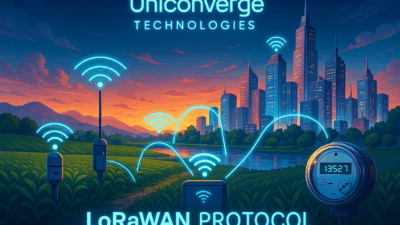

What Is a LoRaWAN Network?
At its core, a LoRaWAN network (Long Range Wide Area Network) is a communication protocol specially designed for the Internet of Things (IoT). Its superpower? Connecting thousands of small, energy-efficient devices—like sensors or smart tags—over impressive distances, all while using minimal battery. It’s the secret ingredient that allows a single network to cover a greenhouse, a neighborhood, or even an entire city.
Developed and maintained by the LoRa Alliance, the LoRaWAN network is open, secure, and scalable. It has become the backbone for industries ranging from agriculture and utilities to logistics and city management, supporting massive numbers of devices with just a few gateways.
What makes the LoRaWAN network so valuable is its flexibility. A single gateway can connect to thousands of devices, making coverage large and affordable. Since devices barely sip power, many can run for years on tiny batteries. Unlike other wireless systems that need frequent maintenance or expensive infrastructure, the LoRaWAN network keeps things simple—and remarkably cost-effective.
Breaking Down LoRa and LoRaWAN
There’s often confusion about what’s LoRa and what’s LoRaWAN—so let’s clear it up:
- LoRa refers to the actual radio technology. It sends signals over long distances using a unique spread spectrum technique, making it perfect for scenarios where WiFi or Bluetooth would struggle.
- LoRaWAN is the full system and protocol—defining how masses of these devices share, secure, and route data across a vast wireless network.
Think of LoRa as the road and the LoRaWAN network as the rules, traffic lights, and highways that organize all travel. While LoRa lets a device shout a message far and wide, only with the LoRaWAN network can we create synchronized, secure, and scalable communication, letting thousands of devices play nicely together.
With a LoRaWAN network, you get not just reach, but also encrypted communication, device authentication, and robust management—essentials for any real-world IoT project.
Inside a LoRaWAN Network: Architecture
One of the clever design choices of a LoRaWAN network is its star topology. What does that mean?
- End-devices (sensors, meters, trackers) are out in the field collecting or sending data.
- Gateways act like antenna towers, picking up LoRa signals from any device within range and passing data securely onto the main network servers.
- Network servers process all incoming data from gateways, strip out duplicates, check security, and figure out where to send the final data.
- Application servers handle the last leg—storing, analyzing, and displaying data, or integrating it with apps and business systems.
A single gateway in a LoRaWAN network can manage thousands of devices, and by adding more gateways and servers, the system scales up while still keeping things efficient and organized. Devices only need to reach their closest gateway; the network does the rest.
Key Components of the LoRaWAN Network
End-Devices
These are the “boots on the ground”—soil sensors, trackers, remote meters, you name it. End-devices are typically tiny and low-powered, designed for years of use without a battery change. They sleep most of the time, waking just to send a reading or listen for instructions.
Gateways
Gateways form the backbone of the LoRaWAN network. They capture all signals from end-devices and send them on to the network server. Their job is to act as traffic cops rather than analysts—they relay data, making sure everything stays connected between the wireless world and the internet.
Network Server
This component is the “brains” of the LoRaWAN network. It manages network security, handles data routing, chooses the best gateway to reply through, and ensures only valid, untampered data reaches the destination.
Application Server
Think of this as the command center. Here’s where the LoRaWAN network’s data is finally decoded, stored securely, visualized, or used to trigger alerts or actions for users and businesses.
How LoRaWAN Network Devices Communicate

The magic of a LoRaWAN network is efficient, asynchronous communication. Devices don’t need constant supervision; they send data only when it’s necessary. Each message is picked up by any gateway within range, giving you redundancy and reliability.
Data travels through the system safely with built-in, end-to-end encryption (using AES-128 at multiple layers). The network server removes duplicate messages, checks sender identity, and forwards the right data to the proper application.
The LoRaWAN network uses a smart approach called Adaptive Data Rate (ADR), adjusting how fast data is sent and the power used. Devices closer to gateways can transmit faster and use less power, while distant devices go a bit slower to preserve energy and reliability.
Device Classes: Tailoring for Every Use
Not every device on a LoRaWAN network is the same. There are three device classes—each designed for a specific job:
- Class A: Extreme battery-saving. Devices “wake up” only when sending data and briefly open their ears to receive. Perfect for simple sensors or meters.
- Class B: Devices check in at scheduled times, allowing for a balance between battery life and responsiveness.
- Class C: Always listening for updates (except when sending). Ideal for plugged-in sensors or scenarios where immediate commands are needed.
Picking the right class is essential for maximizing both the effectiveness and efficiency of your LoRaWAN network.
Navigating Regulations and Frequency Bands
A LoRaWAN network isn’t “one size fits all”—you have to consider local radio regulations and rules. Power limits and frequency bands differ around the globe:
- Europe: Uses 868 MHz; strict rules on how often devices transmit (duty cycle limits).
- U.S.: Primarily 915 MHz; offers more channels and slightly different technical specs.
- Asia-Pacific: Tends to favor 923 MHz, but local laws may differ.
Choose equipment and settings for your LoRaWAN network that fit your region. Compliance isn’t just a legal issue—it also boosts coverage and reduces interference for more reliable IoT.
Security and Device Activation in a LoRaWAN Network
Building a secure LoRaWAN network starts the moment a device is activated. There are two types of device activation:
- OTAA (Over-The-Air Activation): Provides dynamic, per-session keys. This is the most secure option, creating new encryption for every device join.
- ABP (Activation By Personalization): Uses pre-programmed, static keys. Simpler, but if a key leaks, it could compromise security.
A modern LoRaWAN network keeps threats at bay by regularly updating keys, monitoring unusual network traffic, and adhering to the latest security best practices.
Budgeting for a LoRaWAN Network: What to Expect
Setting up a LoRaWAN network doesn’t have to break the bank, but planning is key.
- Gateways: Range from $200 to over $1,500 each, depending on range, durability, and features.
- Sensors/End-devices: Basic ones start near $10; advanced industrial models can be much more.
- Software: Free options (ChirpStack, etc.) are powerful but need tech skills. Cloud-managed LoRaWAN network services charge per connected device.
- Operation: Includes gateway placement, internet access, power (very low), and upkeep.
Urban networks usually need more gateways due to physical barriers, while rural areas might do more with less. Still, the LoRaWAN network is renowned for delivering ROI within a year or two, especially when compared to cellular systems.
How to Set Up Your Own LoRaWAN Network
Thinking of building your own LoRaWAN network? Here’s a quick how-to for beginners:
- Decide on Network Type: Public or private? For learning, public platforms like The Things Network are great.
- Start Small: Buy a gateway suitable for your environment (indoor or outdoor) and install open-source network server software like ChirpStack, or connect to a community LoRaWAN network.
- Register Devices: Add each sensor’s ID and security keys, and make sure settings (like region and class) are correct.
- Test: Deploy a few sensors, monitor the data flow, and check for gaps in coverage or reliability. Adjust as you grow.
One of the best things about the LoRaWAN network—it’s straightforward to expand as you gain experience or as your project scales.
How LoRaWAN Network Stacks Up Against Other Technologies
LoRaWAN networks aren’t the only option in IoT—so what makes them stand out?
- Compared to cellular IoT: LoRaWAN network is cheaper and more energy-efficient, but slower.
- WiFi/Ethernet: Higher speeds but not practical for battery-powered, widely spaced sensors.
- Bluetooth/Zigbee: Good for short-range, high-density setups, but can’t match LoRaWAN network’s reach.
- Sigfox: Also for long-range, low-power use, but lacks the openness and flexibility of a true LoRaWAN network.
- Satellite IoT: Unmatched range, but expensive and less energy-friendly for most use cases.
In short: For low power, wide area, and affordable deployments, nothing matches a LoRaWAN network.
Roaming and Interoperability: Global LoRaWAN Networks
A major strength of the LoRaWAN network is that it’s built for global reach and cross-network cooperation.
- Passive Roaming: Lets compatible devices use nearby LoRaWAN networks without dropping data—useful in areas with spotty coverage.
- Handover Roaming: Keeps devices connected on the move, as they travel between different operator zones.
These features rely on global standards (from the LoRa Alliance), ensuring any certified device works anywhere a LoRaWAN network is available. No vendor lock-in—just smooth collaboration.
LoRaWAN Network in Real Life: Proven Value

Investing in a LoRaWAN network pays off across a wide range of industries:
- Smart Farms: A single investment in LoRaWAN network infrastructure often pays for itself in a year. Sensors help save water, reduce chemical use, and boost yields.
- Factories: Sensors hooked to a LoRaWAN network cut surprise equipment failures, slashing downtime and saving tens of thousands annually.
- Smart Cities: From optimizing waste collection to streamlining traffic and parking, cities save money and improve services for residents.
The common themes? The LoRaWAN network brings efficiency, saves costs, and often enables new capabilities that just weren’t possible before.
Open-Source Software & LoRaWAN Network Communities
Getting started with a LoRaWAN network is easier than ever thanks to open-source tools and robust user communities:
- ChirpStack: Free, feature-packed network server software, ideal for DIY or private networks.
- The Things Network: Community-driven, with global coverage and tons of learning resources.
- Open Hardware: Many gateway and sensor designs are shared freely, perfect for custom builds.
- Online Support: Forums, guides, and active contributors mean help is never far away.
The openness of the LoRaWAN network ecosystem means you can build, scale, and adapt without barriers or hefty license fees.
Troubleshooting: Keeping Your LoRaWAN Network Running Smoothly
Every network hits the occasional bump. Here’s how to fix typical LoRaWAN network headaches:
- Activation Problems: Double-check keys and regional settings before rollout.
- Coverage Dead Spots: Move gateways to better positions or enhance antennas; adjust device settings as needed.
- Capacity Issues: Split traffic across more gateways in dense environments and reduce message frequency if possible.
- Security Risks: Rotate keys often, watch for odd patterns in the network server, and keep all software updated.
Small tweaks go a long way in keeping your LoRaWAN network reliable and secure.
LoRaWAN Network Powering the Future: Use Cases
The sky’s the limit with what a LoRaWAN network can empower:
- Farming: Remotely monitor soil and livestock health, boost output, and cut waste—all while running on tiny batteries.
- Industrial: Track vehicles, inventory, or environmental metrics in real time, and automatically schedule repairs or checks.
- Urban Life: Enable smart parking, adaptive street lighting, and efficient waste collection with a robust, city-wide LoRaWAN network.
- Utilities: Read meters or detect leaks in remote areas quickly—a single LoRaWAN network can cover thousands of endpoints at once.
With every month, new applications emerge as more innovators tap into the possibilities of the LoRaWAN network.
Final Thoughts and Your Questions Answered
The LoRaWAN network has already rewritten the rules of connectivity for sensor-rich environments. Its reach, efficiency, and openness make it the clear champion for connecting our physical world to smart, actionable digital insights.
To get the most out of your LoRaWAN network, choose the right devices, plan your coverage well, stay vigilant on security, and be open to help from the active global community.
Frequently Asked Questions:
Q: How far can the LoRaWAN network reach?
A: Depending on setup, you can expect several kilometers in cities and over a dozen kilometers in rural areas.
Q: How many devices can I connect on a LoRaWAN network?
A: A single gateway supports thousands of devices—capacity depends mostly on message frequency and local regulations.
Q: What’s the difference between public and private LoRaWAN networks?
A: Public LoRaWAN networks are pay-as-you-go through an operator; private networks you build and control yourself.
Q: Does LoRaWAN work inside buildings?
A: Yes, but expect a reduced range indoors—placing more gateways helps with coverage in complex environments.
Now you know how the LoRaWAN network is driving innovation from city centers to remote fields. Start exploring, experimenting, and bringing your own smart projects to life—the world of LoRaWAN networks is wide open for you!