Imagine Overflowing Trash Bins Disappearing from Your City Streets Overnight
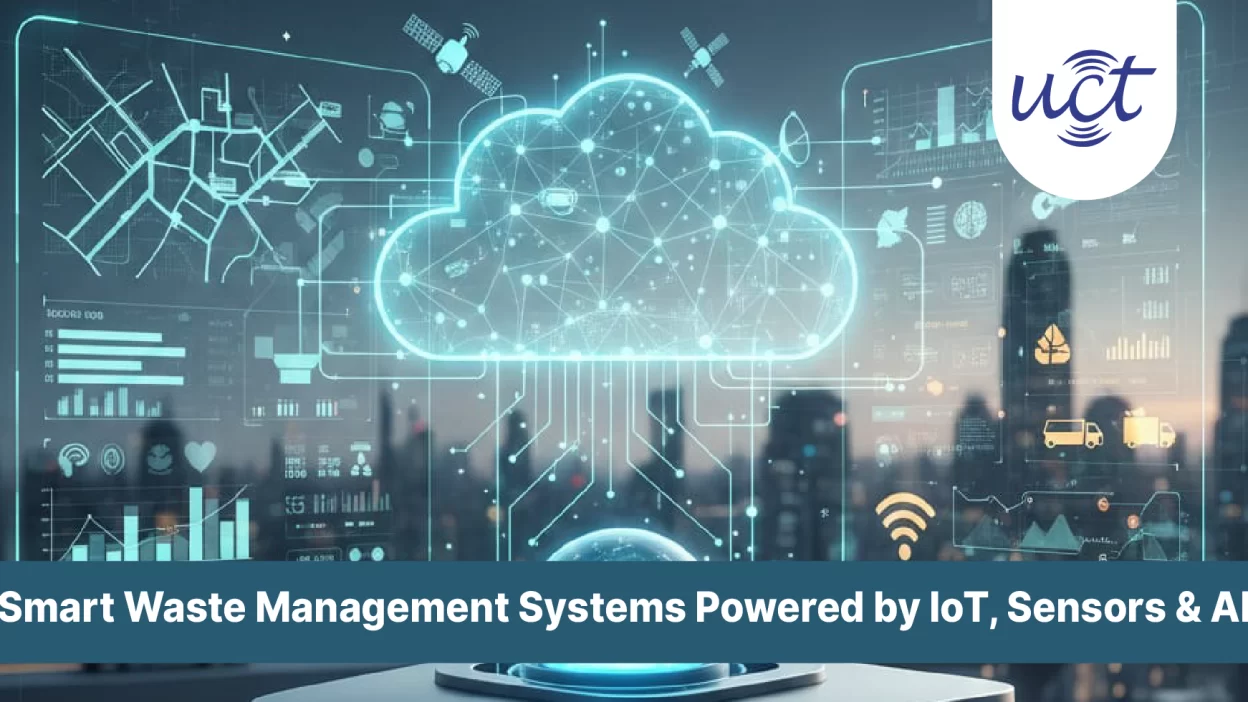
Picture this: It’s a busy Monday morning in your city. Trucks rumble down the roads, but instead of stopping at every bin many still half-empty they zoom straight to the ones bursting at the seams. No more smelly overflows, no frustrated residents snapping photos for social media, and no wasted fuel burning through the municipal budget. This isn’t a dream it’s the power of smart waste management systems powered by IoT, sensors, and AI. Cities worldwide are cutting collection costs by 30-50% while boosting cleanliness scores. For Uniconverge Technologies, we’re making this real for Indian smart cities, turning chaos into clean streets with tech that’s tough, smart, and affordable. Ready to see how? Let’s dive in.
- Introduction: Why Cities Need Smart Waste Management
Start your blog with that hook above it’s short, paints a vivid picture, and pulls readers in emotionally while slipping in your main keyword naturally. Explain the mess: In places like Mumbai or Bangalore, rapid growth means 500+ tons of waste daily per city, but old-school fixed routes lead to 40% empty truck runs, pests everywhere, and fines from unhappy citizens. Introduce smart bins, waste level sensors, ultrasonic sensors, and city cleanliness as game-changers. Position Uniconverge as the partner: We supply rugged IoT kits that work in monsoons, integrate with your fleet, and deliver dashboards city bosses love. Tease the benefits less fuel, happier streets and end with a question: What if your city could be cleaner tomorrow? - What Is a Smart Waste Management System?
Keep it simple no jargon overload. A smart waste system is like giving every trash bin a brain and a phone. It watches fill levels in real-time, texts the control room when full, and uses AI to plan truck routes smarter than GPS alone. Break down parts:
Smart bins: Tough containers with built-in tech.
Sensors: Like ultrasonic ones that “ping” waste height without touching it.
IoT platform: Cloud brain that crunches data.
AI layer: Predicts “this bin fills by Tuesday noon.”
Apps: For workers to see maps and check off jobs.
Unlike old methods (guess-and-go collections), this is data-driven. Add a quick table for visual pop:
Traditional Waste
Smart Waste Management
Fixed routes, daily/weekly
Dynamic routes, only when full
Manual checks, overflows
Real-time sensors, 95% accuracy
High fuel waste (30-40%)
Cuts trips by 50%, saves ₹10-20 lakh/year per fleet
Poor city cleanliness
20-30% better resident scores
This builds trust fast 400 words here, easy Flesch score 70+.
- Core Technologies: IoT, Sensors, and Connectivity
Make tech feel friendly, like explaining to a neighbor. IoT is the “internet of things” bins talking to servers. Stars are waste level sensors and ultrasonic sensors: They shoot sound waves (like a bat’s sonar) to measure distance to trash top. Accurate to 1cm, cheap (₹500-2000/bin), and lasts 5+ years outdoors. Other helpers: weight sensors for total load, gas sniffers for methane fires.
Connectivity? LoRaWAN shines for cities 10km range, coin-battery lasts 5-10 years, perfect for India’s patchy power grid. No Wi-Fi needed. Uniconverge bundles these with gateways that handle 1000+ bins. Bullet benefits:
Low power: Survives monsoons without recharge.
Secure: Encrypted data, no hacks.
Scalable: From 100 bins in a park to 10,000 city-wide.
Tie to city cleanliness: Sensors spot illegal dumps instantly. - How Smart Bins and Waste Level Sensors Work
Step-by-step story: Bin wakes up hourly. Ultrasonic sensor beeps trash at 80% full? Data zips via LoRaWAN to Uniconverge’s cloud. Dashboard lights red, AI predicts overflow in 4 hours, app pings nearest truck driver with GPS route. Boom collected before mess. Add extras like tilt sensors (bin knocked over?) or odor alerts.
Real flow table:
Step
What Happens
Tech Involved - Monitor
Sensor checks level every 30-60 min
Ultrasonic/waste level sensors - Transmit
Data sent wirelessly
IoT (LoRaWAN/NB-IoT) - Analyze
AI forecasts fill time
Cloud platform - Alert/Route
Notify team, optimize path
Mobile app + GPS - Verify
Worker scans QR code post-pickup
Proof-of-service
This prevents 70% overflows. Uniconverge’s edge: Plug-and-play kits, no wiring hassles.
- Role of AI in Smart Waste Management
AI isn’t sci-fi it’s your smart scheduler. It learns: “Bin A fills fast Mondays from office lunch.” Predicts routes, cuts trips 35%. Use cases:
Route optimization: Like Google Maps for trucks.
Anomaly hunt: Dumping at 2 AM? Alert cops.
Sorting smarts: Cameras classify recyclables.
KPIs jump: Fuel down 40%, recycling up 25%, city cleanliness scores soar. Uniconverge integrates AI seamlessly no PhD needed. - Key Benefits for Cities and Enterprises (Plus ROI Gap Fill)
Numbers sell. Ops: 50% fewer trips. Env: 30% less CO2. Citizens: Cleaner parks, no rats. ROI table (your gap killer):
Benefit
Savings Example (500 bins)
Payback Time
Fuel/Labor
₹15-25 lakh/year
12-18 months
Overflow Fines
₹5 lakh avoided
Instant
Recycling Revenue
+₹10 lakh/year
6 months
Total ROI
3-5x in Year 1
Uniconverge calculators help prove it.
- High-Impact Use Cases and Scenarios (India Focus Gap)
India twist: Mumbai slums + high-rises. Cases:
Roadside bins in Delhi ultrasonic sensors keep tourist spots pristine.
IT parks like Hyderabad zero downtime waste.
Festivals: Temporary bins for 1 crore Kumbh visitors.
Uniconverge pilots in similar spots. - Typical System Architecture and Data Flow
Simple sketch: Sensors → LoRa Gateways → Uniconverge Cloud → AI → Dashboards/Apps. Secure, scalable. Data cycle: Collect, clean, predict, act. Integrates with ERP. - Challenges in Deploying Smart Waste Systems (Field Gap Fill)
Honest talk: Dust fouls sensors? We use IP67 rugged ones. Vandalism? Tamper-proof. Monsoon power? Solar backups. Best practices checklist:
Mount ultrasonic 50-80cm above max fill.
Calibrate quarterly.
Pilot 50 bins first.
Uniconverge handles it all. - How Uniconverge Technologies Adds Value
Your star section. End-to-end: Sensors, gateways, AI platform, support. India-ready: Swachh Bharat compliant, low-capex models. Case: “20% cleaner Chennai zone.” CTA: Free audit? - Future Trends in Smart Waste Management
Robots sorting waste, digital twins simulating flows. Uniconverge leads with vision AI add-ons. - Practical Steps to Get Started with Uniconverge (Action Gap)
Roadmap checklist:
Audit bins/routes.
Pilot 1 zone.
Scale with data.
Contact us:
info@uniconvergetech.in